


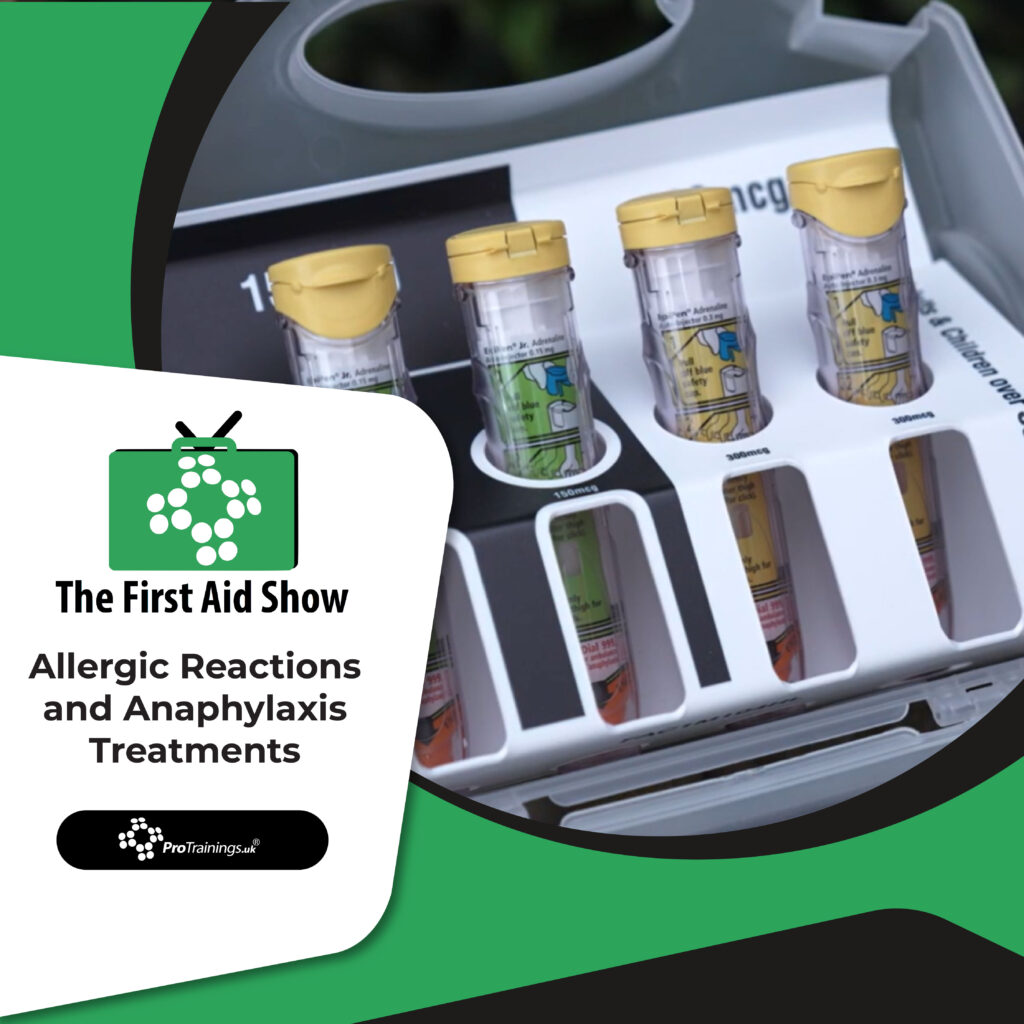

Allergic Reactions and Anaphylaxis Treatments are important topics for anyone involved in first aid, healthcare, education, food service, or childcare. Allergies affect millions of people worldwide, and while some reactions remain mild, others can rapidly develop into life-threatening emergencies. Therefore, understanding Allergic Reactions and Anaphylaxis Treatments can help individuals recognise symptoms early, respond appropriately, and potentially save lives.
An allergy occurs when the body’s immune system mistakenly identifies a normally harmless substance as a threat. As a result, the body launches an immune response, producing antibodies and releasing chemicals such as histamine. These chemicals trigger the symptoms commonly associated with allergic reactions.
What Causes an Allergic Reaction?
Any substance that triggers an allergic reaction is known as an allergen. While most people can come into contact with these substances without any problems, individuals with allergies may experience a range of symptoms.
Common allergens include:
- Peanuts and tree nuts
- Eggs
- Shellfish
- Milk and dairy products
- Pollen
- Latex
- Animal dander
- Insect stings
- Certain medications
Furthermore, allergens can enter the body in several ways, including ingestion, inhalation, skin contact, or injection through insect stings and medications.
How Allergies Develop
When someone encounters an allergen for the first time, their immune system may become sensitised to it. Although there may be no immediate symptoms, the body begins producing antibodies against the substance.
Subsequently, when the person encounters the same allergen again, the immune system recognises it and reacts aggressively. Consequently, histamine and other inflammatory chemicals are released into the body, causing the symptoms of an allergic reaction.
Common Signs and Symptoms of Allergic Reactions
Symptoms can vary depending on the allergen and how it enters the body. Some reactions remain mild, whereas others become increasingly severe.
Common symptoms include:
- Sneezing
- Runny nose
- Itchy eyes
- Skin rashes or hives
- Wheezing
- Coughing
- Swelling of the lips or face
- Itching of the mouth or throat
Additionally, some individuals may experience digestive symptoms such as nausea, abdominal pain, vomiting, or diarrhoea.
Understanding the Difference Between Allergies, Sensitivities and Intolerances
Not every adverse reaction to food or substances is an allergy. Therefore, it is important to understand the differences.
Allergies involve the immune system and can trigger serious reactions even when exposure is minimal.
Sensitivities involve an exaggerated response to a substance. For example, some people experience palpitations or tremors after consuming small amounts of caffeine.
Intolerances do not involve the immune system. Instead, they occur when the body struggles to process a substance properly. Common examples include lactose intolerance and gluten intolerance.
While intolerances can cause significant discomfort, they do not typically trigger anaphylaxis.
What Is Anaphylaxis?
Anaphylaxis is the most severe form of allergic reaction. It affects multiple body systems simultaneously and can quickly become life-threatening.
During anaphylaxis, the respiratory and circulatory systems can become severely compromised. Consequently, immediate treatment is essential.
Signs and symptoms may include:
- Difficulty breathing
- Wheezing
- Persistent coughing
- Swelling of the tongue or throat
- Swelling of the face and lips
- Dizziness or fainting
- Pale, clammy skin
- Abdominal pain
- Nausea and vomiting
- Collapse or loss of consciousness
Furthermore, symptoms can worsen rapidly, making early recognition critical.
Emergency Treatment for Anaphylaxis
When discussing Allergic Reactions and Anaphylaxis Treatments, adrenaline remains the most important emergency medication.
Adrenaline auto-injectors provide a pre-measured dose of adrenaline directly into the muscle. This medication helps:
- Open the airways
- Reduce swelling
- Improve breathing
- Support blood pressure
- Slow the progression of the allergic reaction
As a result, adrenaline can be life-saving while waiting for emergency medical services to arrive.
Using an Adrenaline Auto-Injector
Several auto-injector devices are available, including EpiPen and Jext. Although the designs vary slightly, they all perform the same vital function.
Key steps include:
- Remove the safety cap
- Place the injector against the outer thigh
- Activate the device according to the manufacturer’s instructions
- Hold it in place for the recommended time
- Call 999 immediately
Importantly, the injection can usually be administered through clothing, provided there are no thick seams or objects in the pocket.
After Administering Adrenaline
After giving adrenaline, keep the casualty where they are and encourage them to remain still.
You should:
- Call 999 immediately if you have not already done so
- Monitor their breathing closely
- Watch for any deterioration
- Prepare a second auto-injector if available
- Provide reassurance until help arrives
Many people carry two auto-injectors because a second dose may be needed if symptoms fail to improve after 5 to 15 minutes.
Furthermore, if a second dose is given, inform emergency services immediately so they know exactly how much adrenaline the casualty has received.
Final Thoughts
Allergic Reactions and Anaphylaxis Treatments are essential areas of knowledge for both healthcare professionals and members of the public. While mild allergic reactions can often be managed by avoiding triggers and treating symptoms, anaphylaxis requires immediate action and emergency medical care.
By recognising the signs early, administering adrenaline promptly, and contacting emergency services without delay, you can significantly improve the casualty’s chances of recovery. Ultimately, awareness, preparation, and swift action remain the most effective tools when responding to severe allergic reactions.
Learn How to Respond to Allergic Reactions with Confidence
If you would like to develop your understanding of allergies and anaphylaxis, the Allergy Awareness and Anaphylaxis Level 3 (VTQ)™ Course provides comprehensive training on recognising allergic reactions, identifying the signs of anaphylaxis and responding appropriately during an emergency. The course is suitable for parents, carers, teachers, workplace first aiders and anyone who may need to support someone experiencing a severe allergic reaction.
To complement your learning, the Epi-Pen Trainer offers a safe and practical way to practise using an adrenaline auto-injector. Because the trainer contains no needle or medication, learners can build familiarity with the device and gain confidence in the administration technique before facing a real-life emergency.
By combining professional allergy awareness training with hands-on practice, you can improve your preparedness and feel more confident when responding to anaphylaxis and other serious allergic reactions.