


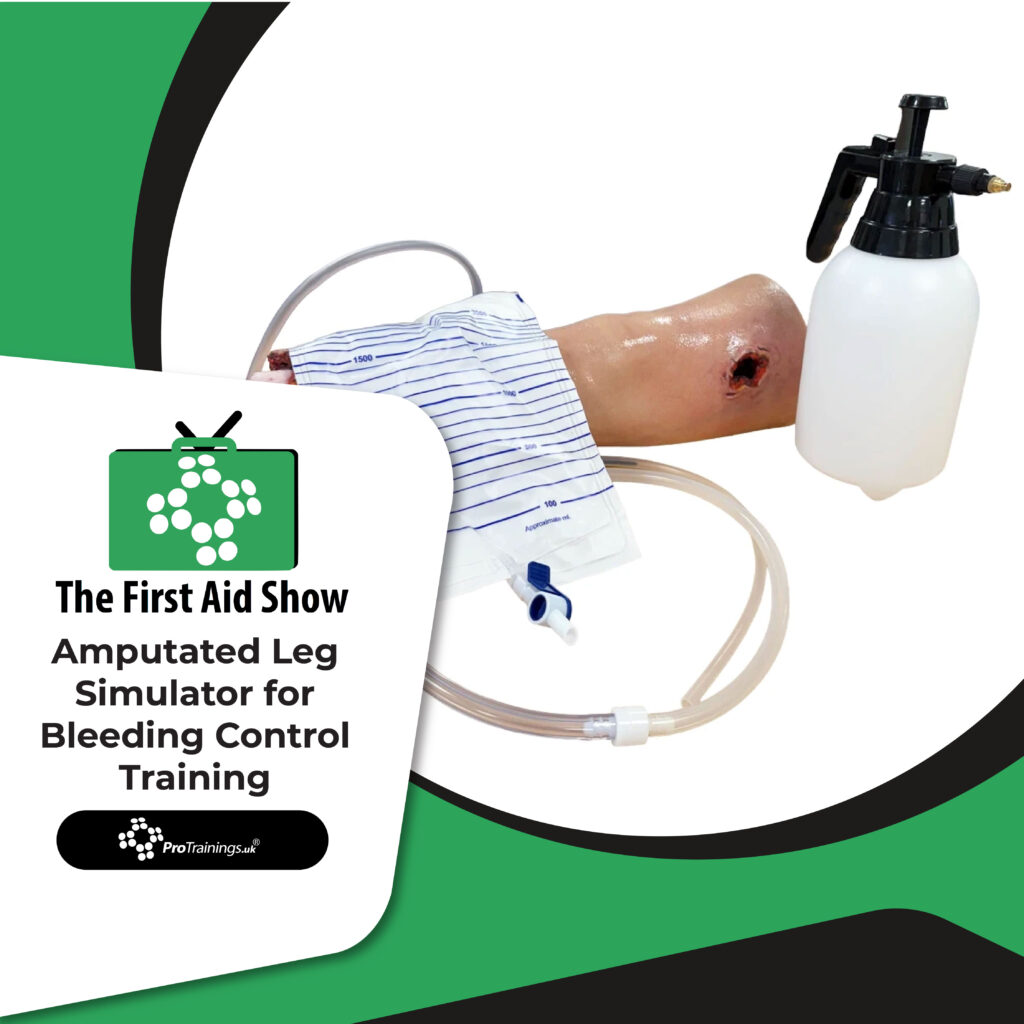

Amputated Leg Simulator for Bleeding Control Training provides a highly realistic way to teach and practise life-saving haemorrhage control techniques. Whether learners are training in the use of tourniquets, wound packing, trauma dressings, or bleeding control procedures, the Amputated Leg Simulator for Bleeding Control Training helps create realistic scenarios that improve confidence, competence, and practical skills. Furthermore, the simulator offers both visual and tactile realism, allowing students to experience training that closely replicates real-world traumatic injuries.
Developed as a practical training aid, this simulator features a realistic amputated limb with exposed bone, tissue, and multiple wound sites. Consequently, instructors can deliver engaging, hands-on training that prepares learners for serious bleeding emergencies in workplace, first aid, military, emergency services, and trauma care environments.
Realistic Trauma Simulation
One of the standout features of this simulator is its lifelike appearance. The amputated section accurately represents a traumatic limb injury, helping students understand the severity of catastrophic bleeding incidents.
The simulator includes:
- A realistic amputated leg section
- Visible exposed bone and tissue
- Multiple wound locations
- Compressible soft tissue structure
- Life-like appearance and feel
As a result, learners gain valuable experience working with injuries that closely resemble those encountered in real emergencies.
Ideal for Tourniquet Training
Tourniquet application remains one of the most important skills in catastrophic bleeding control. Therefore, training with a realistic limb can significantly improve learner confidence.
The simulator allows users to:
- Apply commercial tourniquets
- Practise correct placement techniques
- Learn how much pressure is required
- Observe the effects of proper application
- Develop muscle memory through repetition
Furthermore, because the limb compresses similarly to human tissue, learners experience realistic resistance when tightening a tourniquet.
Perfect for Wound Packing Practice
In addition to tourniquet training, the simulator includes wound cavities specifically designed for wound packing exercises.
Students can practise using:
- Z-Fold gauze
- WoundClot haemostatic dressings
- Compressed gauze
- Haemostatic agents
- Trauma dressings
Consequently, learners can develop the practical skills needed to control severe bleeding in areas where tourniquets may not be suitable.
Use Dry or With Simulated Blood
One of the major advantages of the simulator is its flexibility. Instructors can use it either as a dry training aid or as a dynamic bleeding simulator.
When used dry, the model remains highly effective for:
- Classroom demonstrations
- Tourniquet practice
- Bandaging exercises
- Basic trauma training
- First aid instruction
However, when greater realism is required, instructors can introduce simulated blood to create active bleeding scenarios.
Advanced Bleeding Simulation Features
The simulator includes the equipment required to create realistic bleeding effects.
The supplied system includes:
- A blood simulation reservoir
- A header bag system
- Flexible tubing connections
- A pressure-generation system
- Flow control mechanisms
Simply add water to the supplied blood concentrate, mix thoroughly, and the simulator is ready for use.
Additionally, instructors can choose from different blood simulation products depending on their training requirements.
Simulating Arterial and Venous Bleeding
The pressurised bleeding system provides exceptional training realism. Instructors can create different bleeding patterns to match various injury scenarios.
Training options include:
- Pulsing arterial bleeding
- Continuous venous bleeding
- Single wound bleeding
- Multiple wound bleeding
- Variable flow rates
Furthermore, instructors can control the bleeding using the pressure system and flow controls, allowing them to tailor scenarios to different skill levels.
Immediate Visual Feedback
Perhaps one of the most valuable training benefits is the immediate feedback provided by the bleeding system.
When blood simulation fluid is flowing through the amputated limb:
- Correctly applied tourniquets stop the flow
- Poorly applied tourniquets allow continued bleeding
- Learners can instantly see the results of their actions
- Training becomes more engaging and memorable
As a result, students quickly learn the importance of applying sufficient pressure and using correct techniques.
Suitable for Indoor and Outdoor Training
Although simulated blood creates the most realistic experience, instructors may prefer a cleaner option for indoor environments.
Fortunately, the simulator can also operate using plain water. While this reduces visual realism slightly, it still provides excellent feedback when practising bleeding control techniques.
Consequently, trainers can adapt the simulator to suit classrooms, training centres, outdoor exercises, and large-scale casualty simulations.
Final Thoughts
Amputated Leg Simulator for Bleeding Control Training offers an outstanding combination of realism, versatility, and practical training value. By allowing learners to practise tourniquet application, wound packing, haemostatic dressing use, and catastrophic bleeding control in realistic scenarios, it helps build the confidence and skills required to manage serious trauma effectively.
Whether used dry for classroom instruction or with simulated blood for advanced trauma scenarios, the Amputated Leg Simulator for Bleeding Control Training provides an engaging and highly effective training solution for first aid instructors, emergency responders, military personnel, healthcare professionals, and workplace safety teams.