


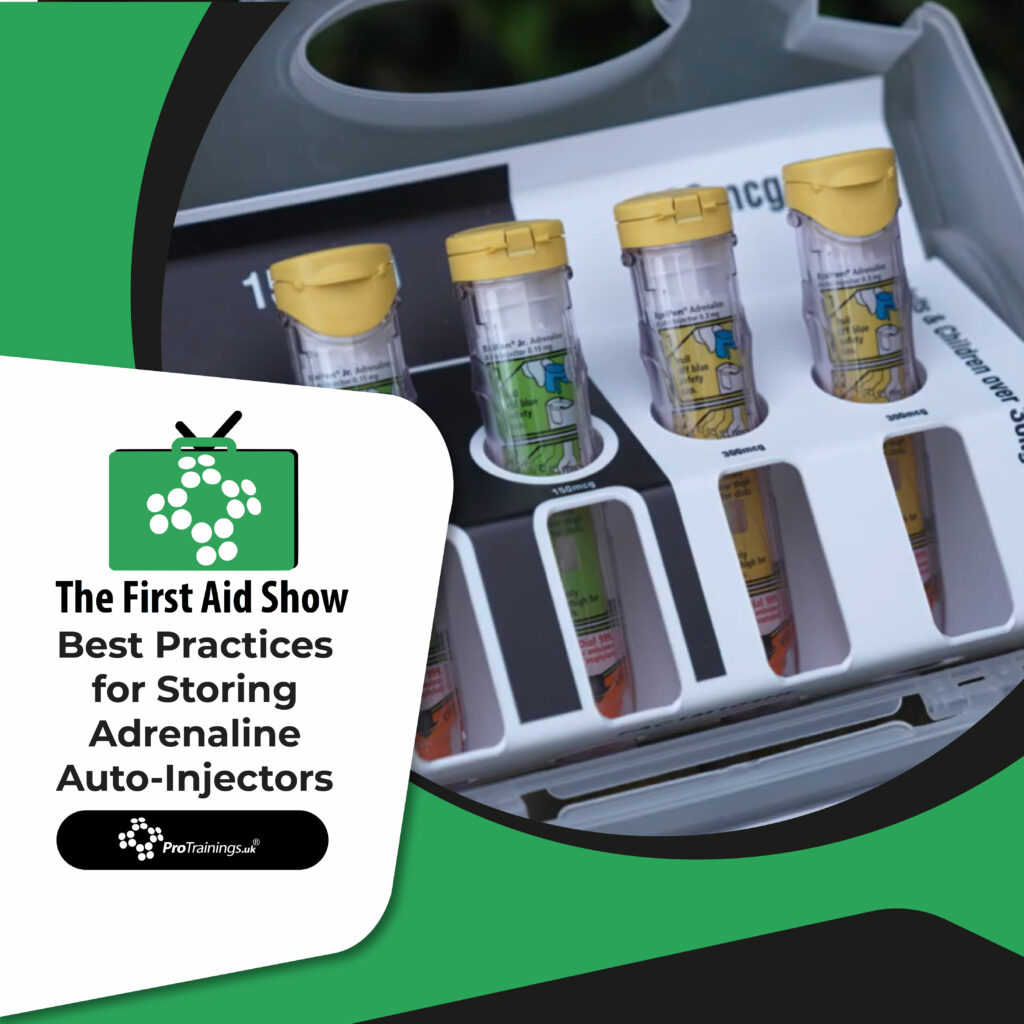

Best Practices for Storing Adrenaline Auto-Injectors are essential for protecting pupils with severe allergies in schools and educational settings. During anaphylaxis, every second matters. Therefore, schools must ensure that adrenaline auto-injectors remain easy to access, clearly identified, and ready for immediate use at all times. Understanding Best Practices for Storing Adrenaline Auto-Injectors helps staff respond more quickly and confidently during a medical emergency.
Firstly, adrenaline auto-injectors provide life-saving emergency treatment for severe allergic reactions. These devices rapidly deliver adrenaline to help reduce dangerous symptoms associated with anaphylaxis, including breathing difficulties and swelling. Consequently, delayed access to medication can significantly increase the risk to the pupil.
Why Quick Access Matters
When an allergic reaction becomes severe, symptoms can worsen rapidly. Therefore, staff must know exactly where emergency medication is stored and how to retrieve it without delay.
Fast access to adrenaline auto-injectors can:
- Reduce the severity of the reaction
- Help stabilise breathing
- Improve the pupil’s chances of recovery
- Provide critical support before emergency services arrive
As a result, schools should avoid storing auto-injectors in locked or difficult-to-reach locations.
Storing Pupils’ Prescribed Auto-Injectors
Many pupils with severe allergies carry their own prescribed adrenaline auto-injectors supplied by parents or carers.
Schools should store these devices:
- In clearly labelled containers
- Alongside the pupil’s allergy management plan
- In locations known to relevant staff
- Somewhere secure yet quickly accessible
Furthermore, staff who regularly supervise the pupil should know exactly where the medication remains stored throughout the day.
Importantly, storage arrangements should support rapid access during emergencies while still protecting the medication from damage or loss.
Spare Adrenaline Auto-Injectors in Schools
In addition to prescribed medication, many schools now keep spare adrenaline auto-injectors on site.
These spare devices may help if:
- The pupil’s own injector is unavailable
- The injector malfunctions
- A second dose becomes necessary before the ambulance arrives
Under UK legislation, schools can hold spare adrenaline auto-injectors provided they:
- Have appropriate policies in place
- Maintain suitable staff training
- Follow correct storage and inspection procedures
Consequently, spare injectors provide an additional layer of safety during allergy emergencies.
Choosing the Right Storage Location
One of the most important Best Practices for Storing Adrenaline Auto-Injectors involves selecting the correct storage location.
Common storage areas may include:
- The school office
- A medical or first aid room
- A designated allergy emergency station
- Portable medical bags during activities
However, regardless of location, the medication should always remain:
- Clearly labelled
- Easy to identify
- Accessible without delay
- Known to all relevant staff
Additionally, schools should include storage locations within allergy awareness training and emergency procedures.
Auto-Injectors During Trips and Activities
Allergy risks do not disappear outside the classroom. Therefore, schools should ensure that adrenaline auto-injectors travel with pupils during:
- School trips
- Sports activities
- Breakfast clubs
- After-school clubs
As a result, staff can still respond quickly if an allergic reaction occurs away from the main school building.
Furthermore, supervising staff should know:
- Who carries the medication
- Where it is stored during the activity
- How to administer the device correctly
Regular Checks and Maintenance
Effective Best Practices for Storing Adrenaline Auto-Injectors also include regular inspection routines.
Schools should check:
- Expiry dates
- Device condition
- Viewing windows for medication clarity
- Storage labels and documentation
Consequently, regular inspections help ensure that devices remain ready for use during emergencies.
Training and Staff Awareness
Even the best storage system becomes ineffective if staff do not understand it. Therefore, schools should provide regular allergy awareness and anaphylaxis training.
Staff should know:
- Where auto-injectors are stored
- How to recognise anaphylaxis
- How to use different injector devices
- How to contact emergency services quickly
As a result, trained staff can act more confidently and efficiently during emergencies.
Final Thoughts
Ultimately, following Best Practices for Storing Adrenaline Auto-Injectors helps schools create safer environments for pupils with severe allergies. Through clear storage systems, staff training, regular inspections, and rapid accessibility, schools can significantly improve emergency response times.
Most importantly, proper storage and preparation help ensure that life-saving adrenaline treatment can be delivered without delay when every second counts.