


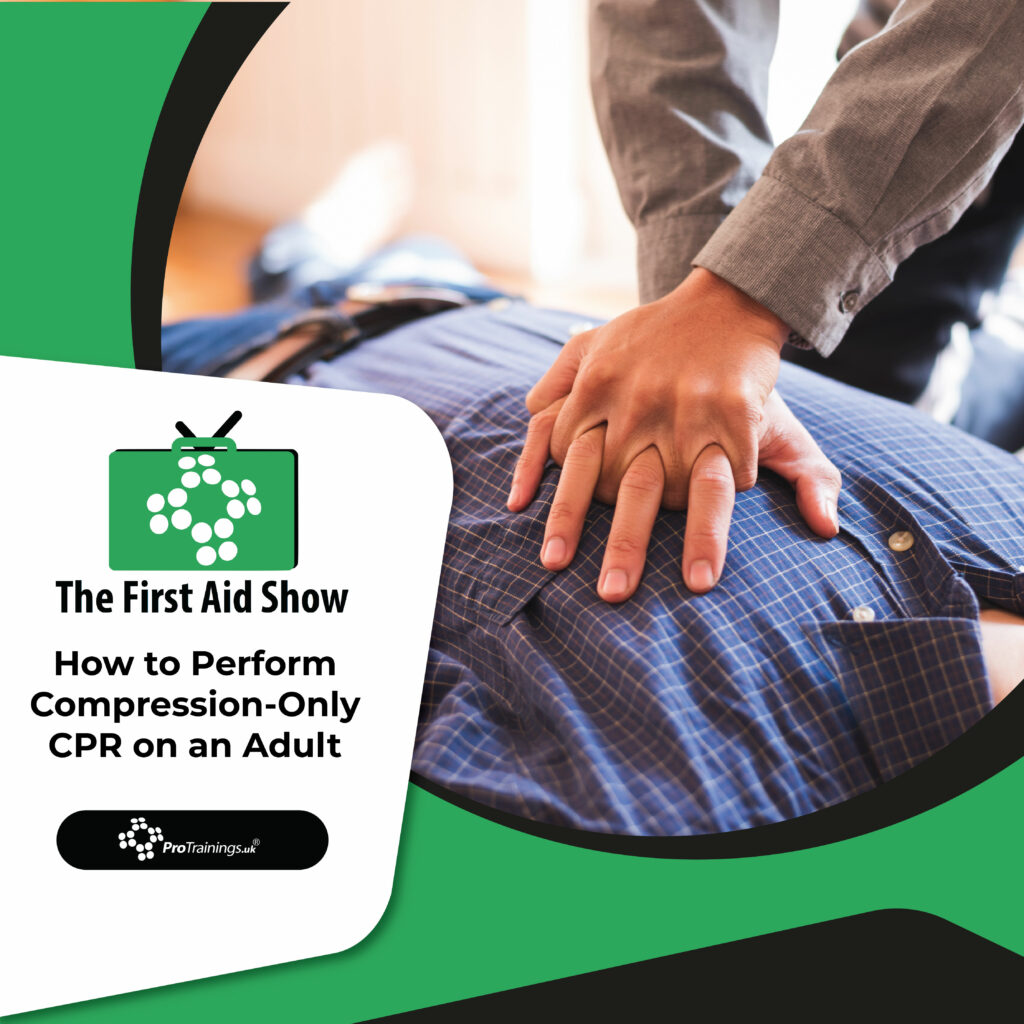

How to Perform Compression-Only CPR on an Adult
In this training film, you will learn how to perform compression-only CPR on an adult based on the latest Resuscitation Council UK guidelines. Compression-only CPR is a lifesaving technique that anyone can perform, even without formal training. The most important thing is to act fast, stay calm, and begin chest compressions as soon as possible.
Step 1: Check for Danger
Before helping, quickly check that the scene is safe. Look for hazards like moving vehicles, fire, live wires, or broken glass. Only approach if it’s safe to do so.
Step 2: Check for a Response
Gently shake the person’s shoulders and ask loudly, “Are you okay?” If they don’t respond, shout for help immediately.
If someone is nearby, ask them to call 999, switch their phone to speaker, and locate an AED if one is available. If you’re alone, call 999 yourself and put your phone on speaker. The emergency operator will guide you through every step.
Step 3: Check for Breathing
Open the airway using a head-tilt, chin-lift. Then, check for normal breathing for up to 10 seconds. Look for chest movement and listen for breath sounds.
If the person is not breathing or only gasping, tell the operator. This is a cardiac arrest. You must begin CPR without delay.
Step 4: Start Chest Compressions
The operator may say: “Place the heel of your hand in the centre of the chest, put your other hand on top, and push hard and fast.”
- Kneel beside the casualty.
- Place the heel of one hand in the centre of the chest, between the nipples.
- Put your other hand on top. Interlock your fingers.
- Keep your arms straight and shoulders directly above your hands.
- Push down 5–6 cm, then let the chest rise fully before the next push.
- Maintain a pace of 100 to 120 compressions per minute. That’s about two per second.
- Use the beat of “Stayin’ Alive” or “Baby Shark” to keep rhythm.
Step 5: Keep Going
Do not stop compressions unless:
- The person begins to breathe normally or move.
- Emergency services arrive and take over.
- You become too exhausted and there’s no one to take over.
Step 6: Use an AED If Available
As soon as an AED arrives, turn it on and follow the spoken prompts. The device will tell you when to pause compressions and when to resume. Place the pads on the chest as shown in the diagram on the device, and follow all instructions.
Step 7: Recovery Position
If the person starts breathing again, stop compressions. Roll them gently onto their side into the recovery position. Keep their airway open and monitor their breathing closely until the ambulance arrives.
Key Reminders
- Call 999 straight away and use speakerphone.
- If there’s no normal breathing, begin compressions immediately.
- Push 5–6 cm deep at 100–120 beats per minute.
- Don’t stop unless instructed, help arrives, or the person recovers.
- Use an AED as soon as possible and follow its prompts.
- Even without formal training, doing something is far better than doing nothing at all.
Knowing how to perform compression-only CPR on an adult can make all the difference in a medical emergency. Your confidence and quick actions could save a life before professional help arrives.