


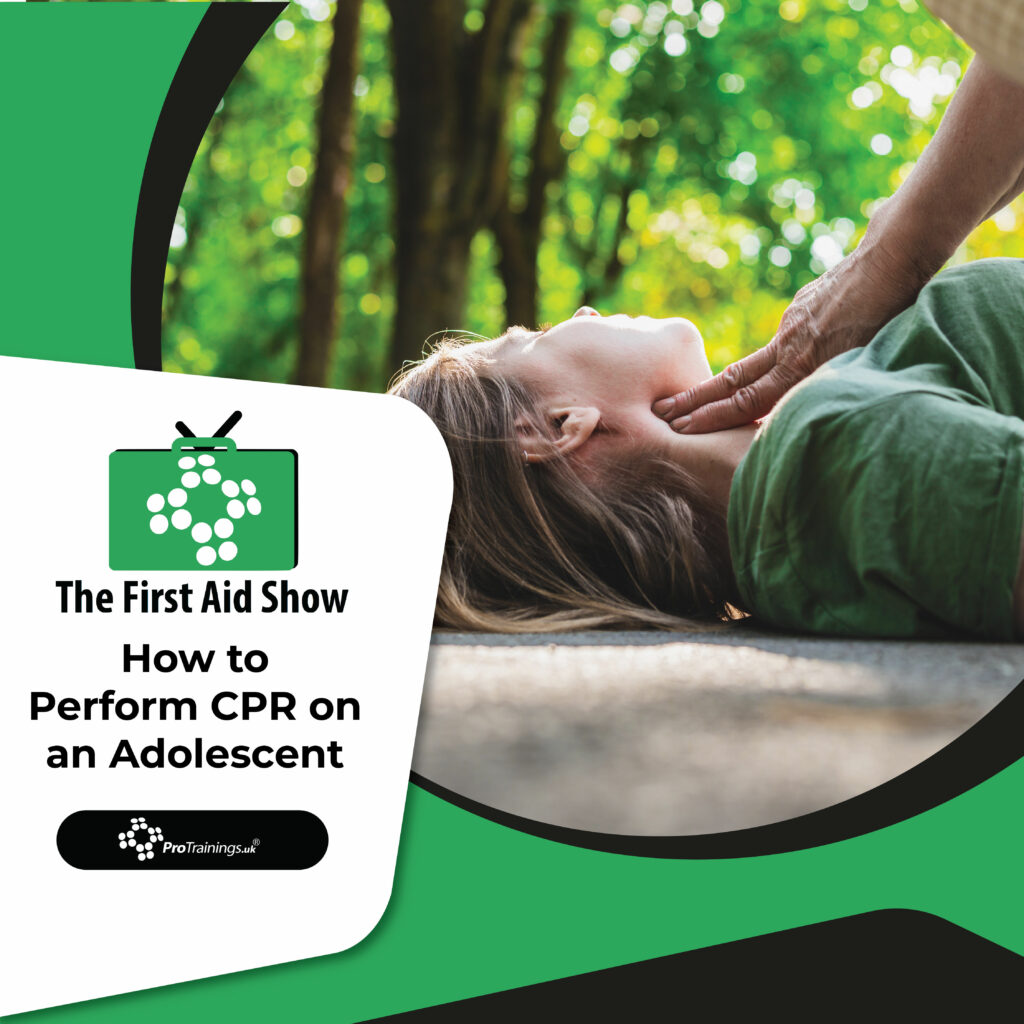

How to Perform CPR on an Adolescent
In this training film, we’ll walk you through how to perform CPR on an adolescent. The term “adolescent” typically refers to individuals between 13 and 18 years old. While cardiac arrest is less common in this age group compared to adults, it can still happen. Often, the cause is related to breathing problems, trauma, or sudden collapse. Therefore, knowing how to respond quickly and effectively is essential.
Step 1: Check for Danger
Always start by ensuring the area around the person is safe. You should never put yourself at risk. Once you’re certain the scene is secure, approach the adolescent and gently tap their shoulder or shake them. Ask loudly, “Are you okay?”
Step 2: Call for Help
If the adolescent doesn’t respond, act immediately. Shout for help. If you are alone, call 999 right away. Place your phone on speaker so you can listen to the emergency operator while beginning CPR. If someone else is present, ask them to make the 999 call and locate an AED as you begin chest compressions.
Step 3: Open the Airway
Use the head-tilt, chin-lift technique to open the airway. Then check for normal breathing. Look for chest movement, listen for breath sounds, and feel for airflow. Spend no more than 10 seconds on this step.
Step 4: Give Rescue Breaths
If the adolescent is not breathing normally, start CPR. Since breathing issues are often the root cause in this age group, rescue breaths are especially important. Begin by giving five rescue breaths.
- Seal your mouth over theirs.
- Pinch their nose shut.
- Blow gently into the mouth for about one second.
- Look for the chest to rise with each breath.
Step 5: Start Chest Compressions
After the rescue breaths, deliver 15 chest compressions. Position the heel of one hand, or both if needed, in the centre of the chest—between the nipples on the lower half of the sternum.
- Push down one-third the depth of the chest.
- Compress at a rate of 100–120 times per minute.
- Allow the chest to rise completely between compressions.
- Try to avoid unnecessary pauses.
Step 6: Continue CPR Cycles
After the 15 compressions, give two rescue breaths. Then repeat the cycle of 15 compressions and two breaths. Keep going until help arrives or the adolescent recovers.
Step 7: Use an AED
As soon as an AED becomes available, use it immediately. Don’t wait for a break in the CPR cycle. Switch on the device and follow its voice instructions while continuing compressions.
- Use adult pads and placement unless paediatric pads are available.
- Apply one pad on the upper right chest and one on the lower left side.
- Make sure the pads don’t touch each other.
- If a shock is advised, stand clear and deliver it as directed.
- Resume CPR right after the shock—don’t wait.
When to Stop CPR
Continue CPR until:
- The adolescent starts breathing normally or moves.
- The emergency team arrives and takes over.
- You become too exhausted to continue—if so, hand over to someone else if possible.
Learning how to perform CPR on an adolescent can make a life-saving difference. By acting quickly, staying calm, and following these steps, you give the person the best possible chance of survival until emergency services arrive.