


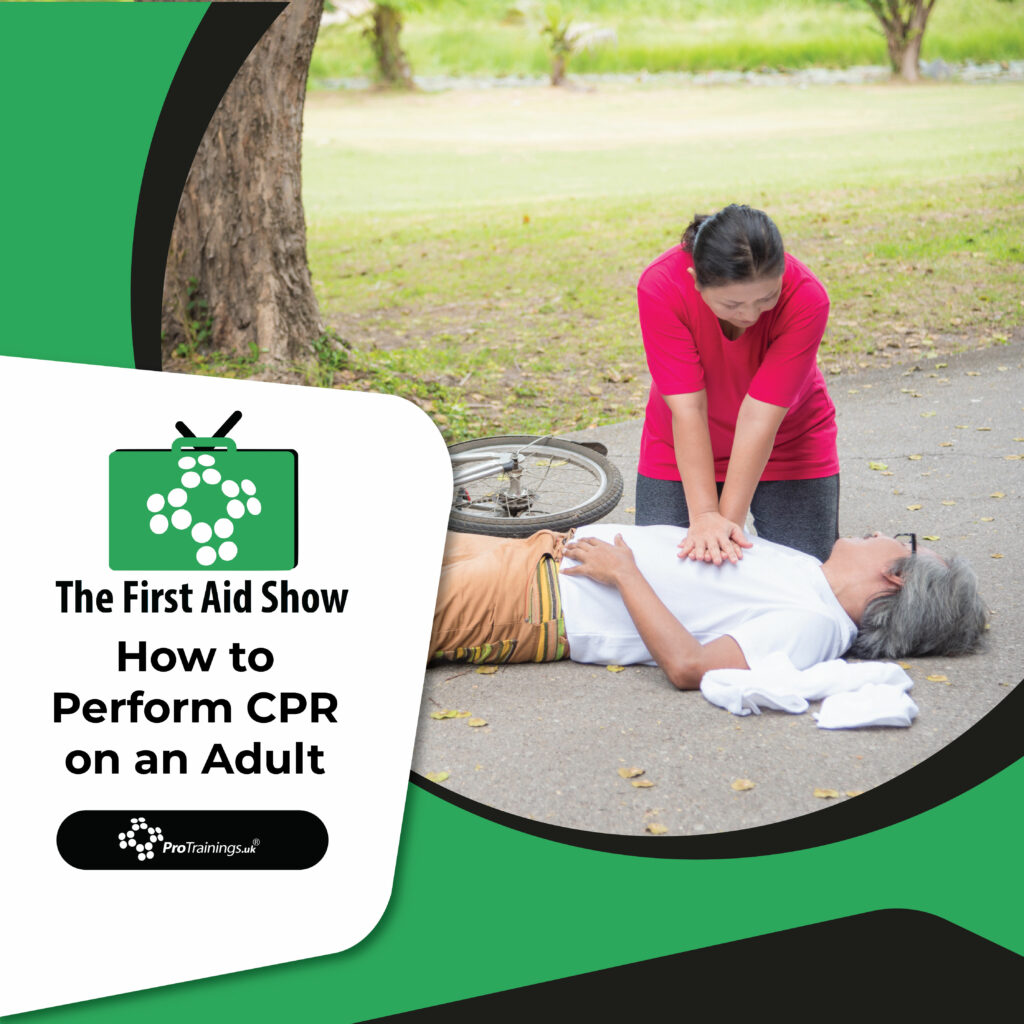

How to Perform CPR on an Adult
When an adult collapses due to cardiac arrest, every second counts. How to Perform CPR on an Adult is not just essential knowledge — it can mean the difference between life and death. Most adult cardiac arrests are caused by sudden cardiac arrhythmia, often linked to underlying heart disease. Because time is critical, you must act without delay.
Step 1: Ensure the Scene is Safe
Before you approach the casualty, pause briefly to check for any immediate dangers. Look for hazards like traffic, electrical wires, fire, or broken glass. Your safety always comes first.
Step 2: Check for Responsiveness
Once safe, approach the person and speak loudly and clearly. Try saying: “Hello, my name’s Keith, I’m a first aider. Can you hear me?” Gently shake their shoulders and ask, “Are you alright?” If there is no response, act quickly.
Shout for help immediately. If someone is nearby, tell them to call 999, put the phone on speaker, and bring an AED if one is available. If you’re alone, use your own phone, switch it to speaker, and call 999. The emergency call handler will guide you step by step through the process.
Step 3: Check for Normal Breathing
- Open the airway using the head-tilt, chin-lift method.
- Place one hand on the forehead and two fingers under the chin.
- Gently tilt the head back.
- Look into the mouth and remove visible obstructions only if easy to do so.
- Check for chest movement, listen for breathing, and feel for airflow for up to 10 seconds.
If the person is not breathing normally or only gasping, assume cardiac arrest. Begin CPR immediately.
Step 4: Begin Chest Compressions
- Kneel beside the casualty’s chest.
- Place the heel of one hand in the centre of the chest on the lower half of the sternum.
- Place your other hand on top, interlock your fingers, and keep your arms straight.
- Push down firmly to a depth of 5 to 6 cm.
- Allow the chest to rise fully between compressions, but don’t lift your hands off the chest.
- Compress at a rate of 100 to 120 per minute — around two per second.
Step 5: Give Rescue Breaths
After 30 compressions, give 2 rescue breaths.
- Re-open the airway with a head-tilt, chin-lift.
- Pinch the nose closed and seal your mouth over theirs.
- Blow steadily for about one second, just enough to make the chest rise.
- Allow the chest to fall before giving the second breath.
If you cannot or are unwilling to give rescue breaths, continue with compression-only CPR. This is still very effective and strongly encouraged.
Step 6: Use the AED as Soon as It Arrives
- Turn on the AED immediately and follow the voice prompts.
- Expose the chest and attach the pads as shown in the diagrams — one below the right collarbone, the other on the lower left chest.
- Allow the AED to analyse the heart rhythm. Ensure no one is touching the casualty during this step.
- If a shock is advised, loudly say “stand clear,” check everyone is clear, then press the shock button.
- Immediately resume CPR with chest compressions.
- If no shock is advised, continue CPR without pause.
Step 7: Continue Until Help Arrives
Keep performing CPR until one of the following happens:
- The person starts to breathe normally or shows clear signs of life such as moving or coughing.
- The emergency services arrive and take over.
- You become too exhausted to continue.
If the person begins breathing, place them in the recovery position. Tilt their head back slightly to maintain the airway and continue to monitor until professional help arrives.
Key Points to Remember
- Check the area for danger before approaching.
- Call 999 and put the phone on speaker.
- Begin CPR immediately if the casualty is unresponsive and not breathing normally.
- Give 30 chest compressions followed by 2 rescue breaths at a rate of 100–120 per minute.
- Use an AED as soon as possible and follow all instructions.
- If you cannot give breaths, perform continuous chest compressions.
Knowing how to perform CPR on an adult gives you the confidence to act fast, stay calm, and potentially save a life in an emergency.