


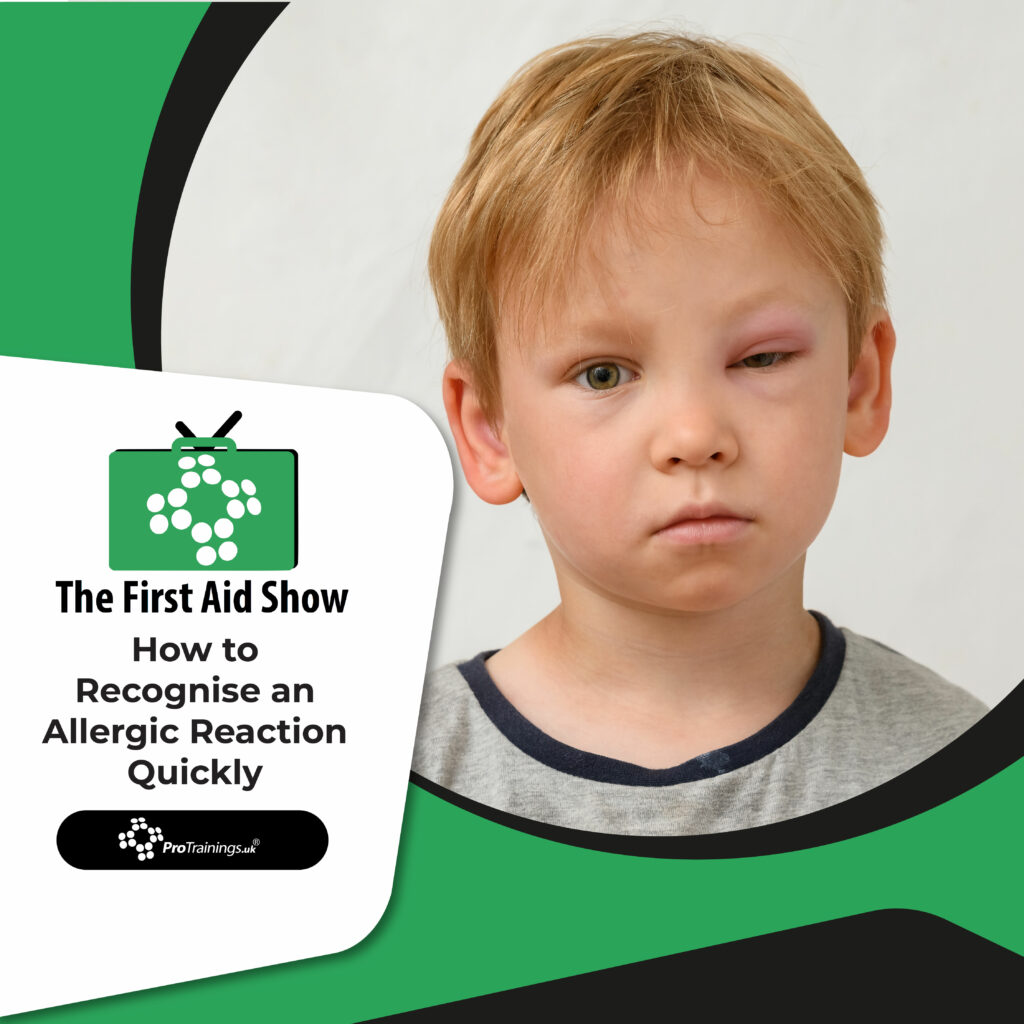

How to Recognise an Allergic Reaction Quickly is one of the most important skills school staff can learn. Allergic reactions can develop rapidly, and in some cases, symptoms can become life-threatening within minutes. Therefore, understanding How to Recognise an Allergic Reaction Quickly allows staff to respond faster, provide appropriate support, and potentially save a pupil’s life.
Firstly, allergic reactions can vary significantly in severity. Some reactions remain mild and only cause irritation or discomfort. However, other reactions can progress into anaphylaxis, which is a serious medical emergency requiring immediate treatment. Consequently, staff should always take allergy symptoms seriously, even if they appear mild at first.
Common Early Signs of an Allergic Reaction
Allergic reactions can affect different parts of the body. In many cases, the skin shows the earliest visible signs.
Common skin symptoms include:
- Itchy skin
- Raised red rashes or hives
- Swelling of the lips, face, or eyes
- Redness or irritation
Additionally, some pupils may complain that their mouth, lips, or throat feel itchy or tingly. Although these symptoms may initially seem minor, they can sometimes signal the beginning of a more serious reaction.
Digestive Symptoms of Allergic Reactions
Furthermore, allergic reactions can also affect the digestive system. Children may complain of:
- Stomach pain
- Nausea
- Vomiting
- Feeling generally unwell
Younger children may struggle to explain their symptoms clearly. Therefore, they might simply say their tummy hurts or that they feel “funny” or poorly.
Importantly, these symptoms often appear shortly after eating or coming into contact with an allergen.
Breathing Difficulties Must Always Be Taken Seriously
One of the most concerning parts of How to Recognise an Allergic Reaction Quickly involves identifying breathing problems early.
A pupil experiencing a more severe allergic reaction may:
- Begin coughing repeatedly
- Wheeze or struggle to breathe
- Develop a hoarse voice
- Complain that their throat feels tight
Consequently, staff should never ignore breathing symptoms. These signs may indicate that the reaction is worsening rapidly.
Recognising the Signs of Anaphylaxis
If the allergic reaction progresses further, the pupil may develop anaphylaxis. This condition is a medical emergency and requires immediate action.
Signs of anaphylaxis may include:
- Severe breathing difficulties
- Swelling of the tongue or throat
- Persistent coughing
- Pale, cold, or clammy skin
- Dizziness or collapse
- Confusion or unusual behaviour
- Extreme anxiety or sudden quietness
In addition, symptoms can appear suddenly and worsen extremely quickly. Sometimes several body systems become affected at the same time, including the skin, breathing, and circulation.
Why Early Recognition Matters
Understanding How to Recognise an Allergic Reaction Quickly allows staff to act before the situation becomes critical. Early intervention can:
- Reduce the severity of the reaction
- Help prevent anaphylaxis from worsening
- Improve the pupil’s chances of recovery
- Provide faster access to emergency treatment
Therefore, schools should ensure that all staff receive regular allergy awareness training and understand the school’s emergency procedures.
Responding to a Suspected Allergic Reaction
If staff suspect an allergic reaction, they should act immediately.
Key actions include:
- Staying calm and reassuring the pupil
- Checking the pupil’s allergy management plan
- Locating emergency medication quickly
- Administering an adrenaline auto-injector if prescribed and needed
- Calling emergency services without delay
Additionally, staff should continue monitoring the pupil closely until medical professionals arrive.
Creating a Safer School Environment
Good communication and preparation also play an important role. Schools should ensure that:
- Staff know which pupils have allergies
- Emergency medication remains accessible
- Allergy management plans stay up to date
- Pupils understand the importance of avoiding allergens
As a result, schools can respond more effectively if an allergic reaction occurs.
Final Thoughts
Ultimately, learning How to Recognise an Allergic Reaction Quickly helps school staff protect pupils and respond confidently during emergencies. By identifying symptoms early, taking concerns seriously, and following emergency procedures promptly, staff can provide rapid support when it matters most.
Most importantly, quick recognition and fast action can make a life-saving difference for a child experiencing an allergic reaction.