


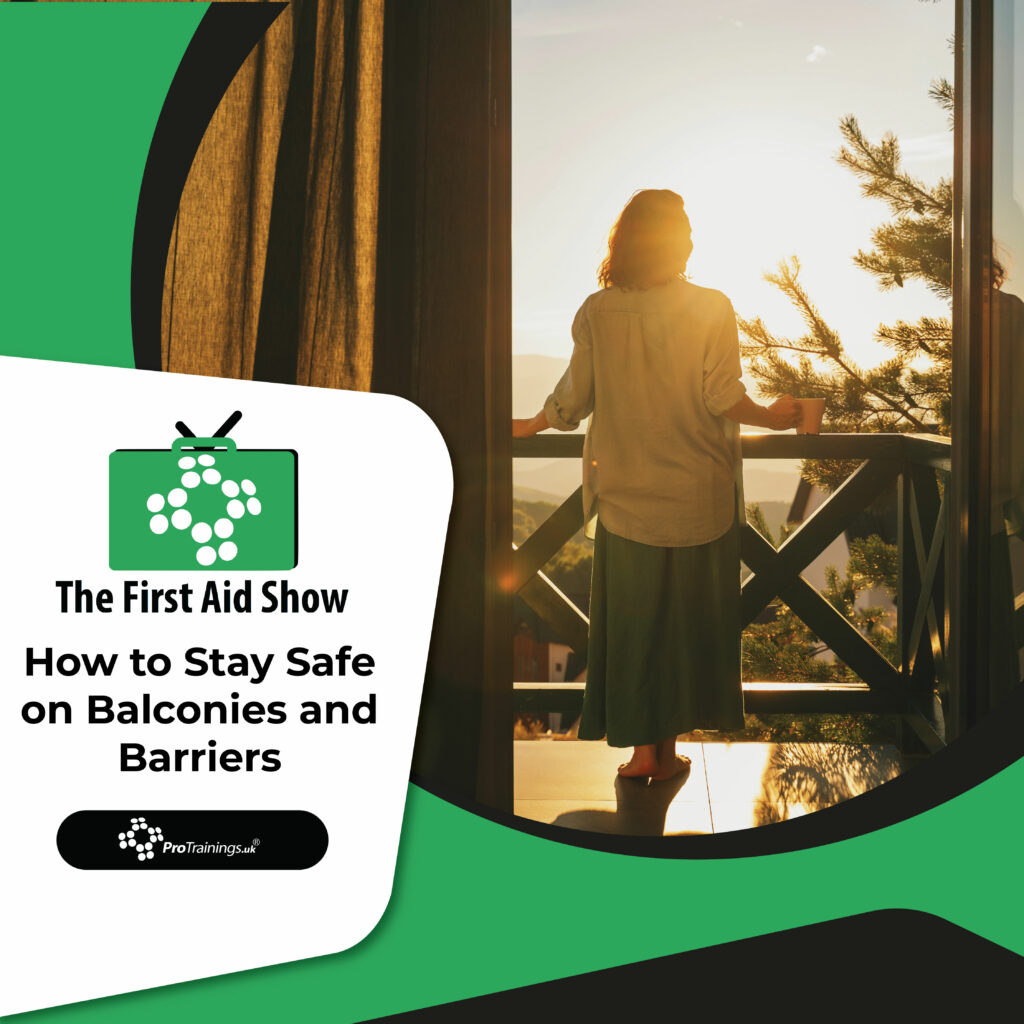

How to Stay Safe on Balconies and Barriers
Falls from height continue to be one of the most serious causes of injury and death in the UK. This danger exists not only in workplaces but also in public and leisure settings. Balconies, terraces, and elevated walkways are often the most overlooked hazards. When these areas are not properly designed, maintained, or managed, the risk of a fall increases significantly. Therefore, understanding how to stay safe on balconies and barriers is absolutely crucial for both employers and venue operators.
According to UK Building Regulations, specifically Approved Document “K” and British Standard BS 6180, strict rules govern the height and construction of barriers. However, simply meeting these minimum standards is not always enough. In real-world scenarios, it makes sense to go beyond the legal baseline—especially in locations where people gather, lean over edges, or drink alcohol.
For example, the required minimum barrier height:
- Is 900 millimetres for indoor stairs, landings, and ramps.
- Rises to 1.1 metres for external balconies, terraces, and roof edges.
- Should be higher and non-climbable in spaces accessible to children. Gaps must be no wider than 100 millimetres.
In social spaces like hotels, rooftop bars, or communal terraces, a higher barrier—around 1.2 to 1.3 metres—can significantly improve safety. Solid panels or vertical balusters prevent climbing and deter dangerous behaviour.
Practical Tips for Safer Balcony Design
- Keep climbable furniture, bins, and plant pots at least 600 millimetres away from the edge.
- Install fixed seating or heavy planters to stop items from being moved closer to the barrier.
- Avoid horizontal railings or mesh that can act like ladders. Choose vertical or solid options instead.
- Make sure the area is brightly lit and has clear signage, especially in evening hours.
- Restrict access during bad weather or when staff are not present, using locks or physical barriers where possible.
Don’t Forget About Maintenance
Even the best-built barriers degrade over time. Weather exposure, rust, corrosion, or simple wear and tear can loosen fittings or weaken materials. That’s why regular inspections matter.
To stay on top of safety:
- Inspect all balcony and terrace barriers at least once per year, or more often in harsh weather conditions.
- Look out for rust, cracks in glass panels, loose screws or bolts, and any wobbling or movement.
- Take unsafe areas out of use immediately, and never delay repairs. Keep records of all maintenance and inspections.
Ultimately, how to stay safe on balconies and barriers comes down to a few key actions: go beyond minimum standards, reduce climbing risks, and inspect regularly. These steps protect not only the public but also your reputation and legal standing.
By taking proactive steps, you show a clear commitment to safety. You’re not just ticking boxes—you’re creating a safer, smarter environment for everyone.