


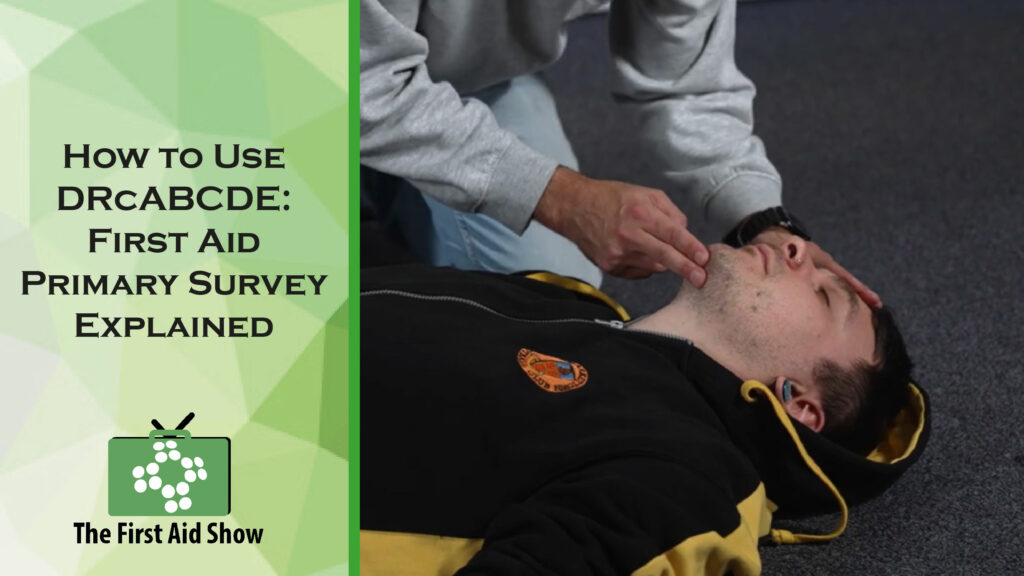

How to Use DRcABCDE is one of the most important skills in first aid and emergency care. This structured approach helps rescuers assess, prioritise, and treat casualties quickly and effectively. Furthermore, How to Use DRcABCDE ensures that you identify and manage the most life-threatening conditions first, which can significantly improve a casualty’s chance of survival.
Importantly, the DRcABCDE method applies to every type of emergency, from minor illness to severe trauma. Therefore, whether you are dealing with a collapse, bleeding injury, breathing emergency, or major accident, this process helps you stay calm, organised, and focused.
What Does DRcABCDE Stand For?
The DRcABCDE approach follows a clear step-by-step structure:
- D – Danger
- R – Response
- c – Catastrophic Bleeding
- A – Airway
- B – Breathing
- C – Circulation
- D – Disability
- E – Exposure
By following these steps in order, you can manage emergencies more effectively and reduce the risk of missing critical problems.
D – Danger
Firstly, before approaching any casualty, stop and assess the environment carefully. You must protect yourself before attempting to help anyone else.
Potential dangers may include:
- Traffic and moving vehicles
- Electrical hazards
- Fire or smoke
- Violence or aggressive behaviour
- Sharp objects or broken glass
- Unstable structures
Therefore, if the scene remains unsafe, do not enter. You cannot help the casualty if you also become injured.
R – Response
Once the scene is safe, check whether the casualty responds.
Speak clearly and ask:
- “Can you hear me?”
- “Are you alright?”
If they do not respond, apply a gentle shoulder tap. This quick assessment helps determine their level of consciousness.
Furthermore, if the casualty remains unresponsive or responds poorly, contact emergency services immediately and place your phone on speaker mode so you can continue treatment.
c – Catastrophic Bleeding
Next, look for severe life-threatening bleeding. Modern first aid guidelines now prioritise catastrophic bleeding before airway management because massive blood loss can cause death within minutes.
To control catastrophic bleeding:
- Apply direct pressure
- Use haemostatic dressings if available
- Apply a tourniquet when necessary
Consequently, controlling major bleeding quickly becomes an absolute priority.
A – Airway
After controlling severe bleeding, move on to the airway.
If the casualty is unresponsive, open the airway using:
- Head tilt and chin lift for most situations
- Jaw thrust if spinal injury is suspected
Additionally, remove visible obstructions carefully. However, never perform blind finger sweeps because this may push objects deeper into the airway.
A clear airway remains essential because oxygen cannot reach the brain without it.
B – Breathing
Next, assess breathing by looking, listening, and feeling for up to ten seconds.
Check for:
- Normal chest rise
- Breathing sounds
- Air movement from the mouth or nose
If the casualty is not breathing normally or only gasping, begin CPR immediately and ask for an AED.
However, if breathing continues normally, assess the quality of breathing and look for signs of distress, wheezing, or chest injuries.
C – Circulation
After breathing, assess circulation and signs of shock.
Look for:
- Pale or clammy skin
- Rapid pulse
- Uncontrolled bleeding
- Reduced consciousness
Furthermore, if shock develops, lay the casualty flat, keep them warm, and treat the underlying cause quickly.
D – Disability
This stage focuses on neurological function and consciousness levels.
Use the AVPU scale:
- A – Alert
- V – Responds to Voice
- P – Responds to Pain
- U – Unresponsive
In addition, check for:
- Confusion
- Seizures
- Pupil changes
- Signs of head injury
If appropriate, consider blood sugar testing because low glucose levels can sometimes cause reduced consciousness.
E – Exposure
Finally, fully expose the casualty to identify hidden injuries, burns, rashes, swelling, or medical alert jewellery.
However, maintain the casualty’s dignity and minimise heat loss throughout the assessment.
Therefore, once you complete your checks, cover the casualty again as soon as possible to reduce the risk of hypothermia.
Why the DRcABCDE Approach Works
The strength of How to Use DRcABCDE lies in its simplicity and structure. Instead of panicking, you follow a logical process that prioritises immediate threats to life.
Most importantly, you must repeat this assessment continuously. Casualties can deteriorate quickly, so your actions should adapt as their condition changes.
Ultimately, learning How to Use DRcABCDE helps first aiders remain calm, organised, and effective during emergencies. By following this structured approach, you can provide rapid care and give casualties the best possible chance of survival and recovery.