


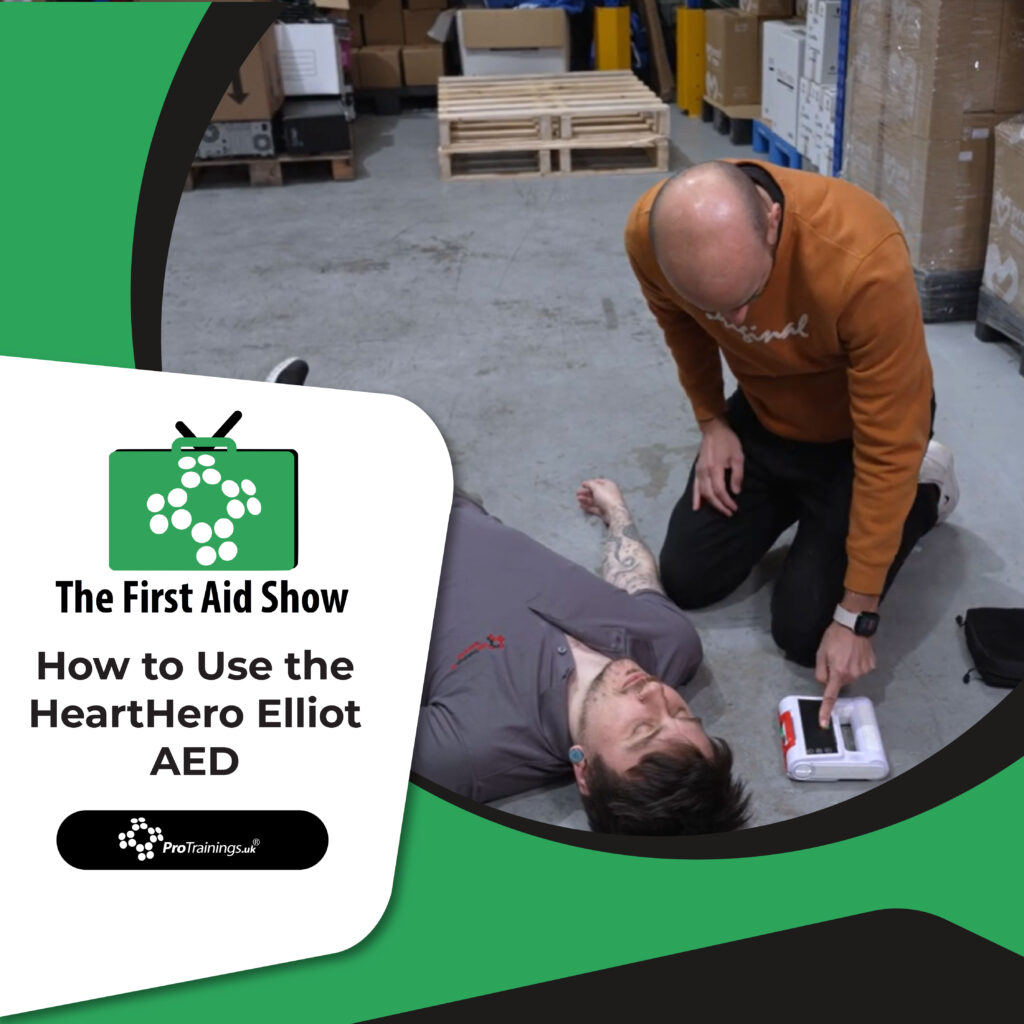

Knowing how to use the HeartHero Elliot AED quickly and correctly could be the difference between life and death. In a sudden cardiac arrest, every second without treatment reduces the chance of survival. Consequently, understanding the steps involved — before an emergency happens — is one of the most valuable things anyone can do. This guide walks through the entire process from switching the device on to powering it down safely after use.
Before You Begin — Scene Safety and Calling for Help
Before touching the casualty or the AED, check that the scene is safe for you, the casualty, and anyone nearby. Do not put yourself at risk. Once the scene is safe, assess the casualty for responsiveness.
If the casualty is unresponsive, act immediately:
- If others are present — send someone to call 999 and retrieve the AED at the same time
- If you are alone — call 999 as soon as possible, then begin the resuscitation process according to your training
Do not delay activating the AED. In cardiac arrest, the sooner the device is switched on and the pads are placed, the better the outcome for the casualty.
How to Turn On the HeartHero Elliot AED
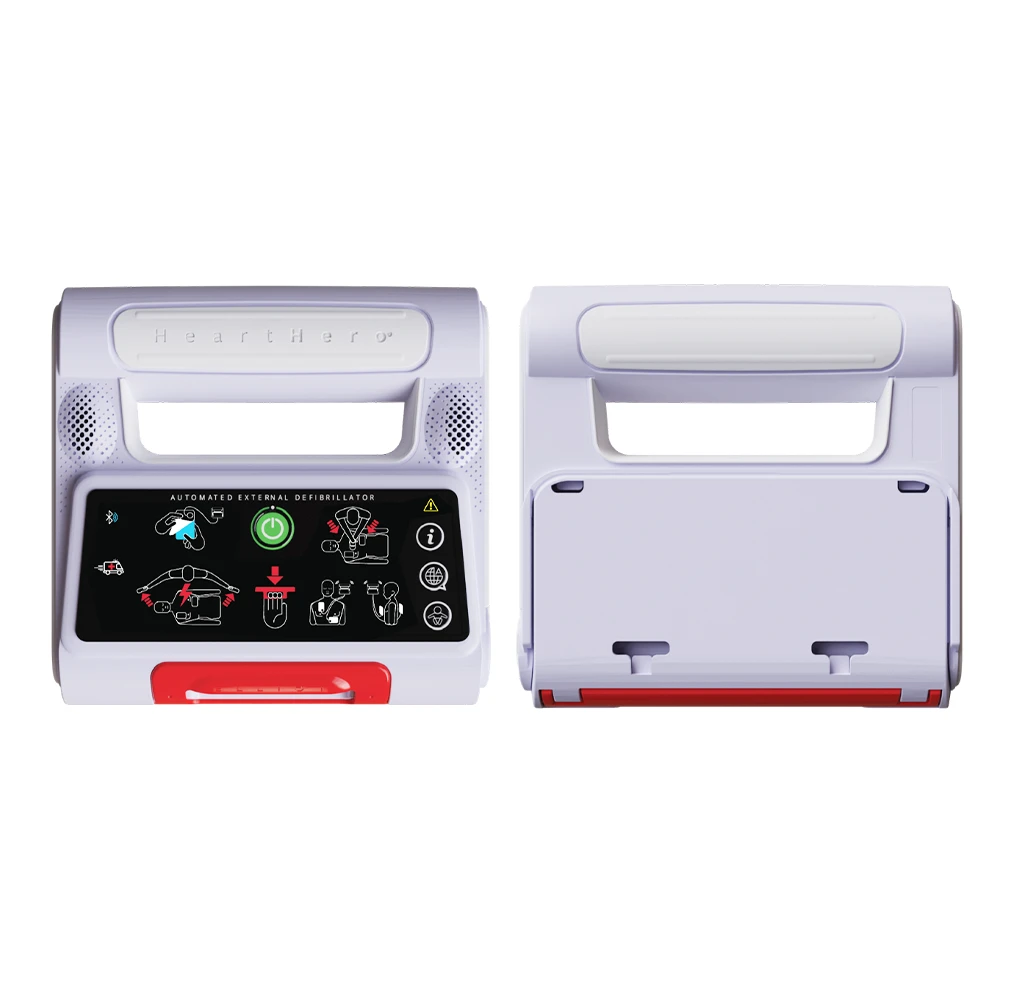
When the HeartHero Elliot AED arrives at the scene, place it beside the casualty on a flat surface. There are two ways to power it on:
- Press the green power button to switch the unit on directly
- Pull the red handle to access the electrode pads — the device will turn on automatically
Once powered on, the device immediately begins guiding the rescuer through voice prompts. Follow each instruction calmly and step by step. The AED is designed to lead the rescuer through the entire process — no prior medical training is required to follow its guidance.
Placing the Electrode Pads Correctly
Remove the electrode pads from the device and peel them away from the liner. Prepare the casualty’s chest if necessary — removing clothing and drying the skin if wet. Place the pads exactly as shown in the diagrams printed on the pads themselves.
Pad placement differs depending on the casualty’s age:
- Adults — place one pad on the upper right side of the chest and the other on the lower left side
- Children — place one pad on the front of the chest and the other in the centre of the back
If the casualty is a child under 25kg, press the child button on the device. This adjusts both the shock level and the voice guidance to suit a paediatric casualty. For adult casualties, continue in normal mode unless the device instructs otherwise.
CPR and the AED Analysis Cycle
Once the pads are in place, the HeartHero Elliot AED will instruct the rescuer to begin CPR. The device provides audible prompts and a metronome to guide compression rate and rhythm. Follow the beat and maintain a consistent pace.
When the AED begins analysing the heart rhythm, stop CPR immediately and ensure nobody is touching the casualty. Any movement during analysis can interfere with the device’s ability to read the heart rhythm accurately. Make sure all bystanders stand clear.
The AED will then determine whether a shock is needed:
- If a shock is advised — ensure everyone stands clear and deliver the shock as instructed
- If no shock is advised — continue CPR immediately as directed by the device
After each analysis or shock delivery, follow the device prompts without delay. This will typically mean restarting CPR straight away.
When to Stop and What to Do Next
Continue the cycle of CPR, analysis, and device instructions until one of the following occurs:
- Emergency services arrive and take over the resuscitation
- The casualty shows clear signs of recovery — such as breathing normally or regaining consciousness
- You are physically unable to continue — in which case, ask a bystander to take over if possible
Throughout the rescue, stay as calm as possible and keep following the AED’s instructions. The device is monitoring the situation continuously and will guide each decision. Furthermore, do not switch the device off during the resuscitation process.
Powering Down and Servicing After Use
Once the resuscitation is complete, power down the HeartHero Elliot AED by pressing and holding the green power button. However, do not open the battery door straight away. While the green indicator light flashes rapidly, the device is transferring event data recorded during the resuscitation. Opening the battery door during this period interrupts that transfer.
Once the flashing stops, servicing can begin. Replace the electrode pads and batteries, then restart the device and run through the test sequence to confirm it has returned to a ready state. A serviced and ready AED is essential — the next emergency could happen at any time.
Key Steps to Remember
When using the HeartHero Elliot AED, the most important actions are:
- Turn the unit on immediately and follow the voice prompts
- Place the pads correctly for the casualty’s age and weight
- Use child mode for casualties under 25kg
- Stand clear during analysis and ensure nobody touches the casualty
- Continue CPR whenever the device instructs
- Service the device fully after use
Final Thoughts
Learning how to use the HeartHero Elliot AED is straightforward — and it is a skill that can save a life. The device guides every step of the process through clear voice prompts, making it accessible to anyone regardless of their medical background. By acting quickly, placing the pads correctly, and following the device instructions throughout, rescuers give the casualty the strongest possible chance of survival.
If you would like further guidance on using the HeartHero Elliot AED or want to discuss first aid training for your team, get in touch with us today. We are here to help.
Learn Life-Saving CPR and AED Skills with HeartHero
When a sudden cardiac arrest occurs, knowing how to respond quickly can make a significant difference. The HeartHero AED Training Courses have been designed to help learners develop the knowledge and confidence needed to act in an emergency.
The Using the HeartHero AED Training Course focuses on the safe and effective use of an automated external defibrillator (AED), guiding learners through the steps involved in recognising a cardiac emergency and delivering potentially life-saving treatment. For those looking to develop a broader understanding of emergency response, the CPR and HeartHero AED Training Course combines AED training with essential CPR skills.
To support practical learning, a range of HeartHero AEDs and accessories are available, including training equipment, replacement pads, batteries and carry cases. These products can help organisations, training providers and first aiders maintain their equipment and gain valuable hands-on experience.
By combining quality training with practical equipment, you can build the confidence and skills needed to respond effectively when every second counts.