


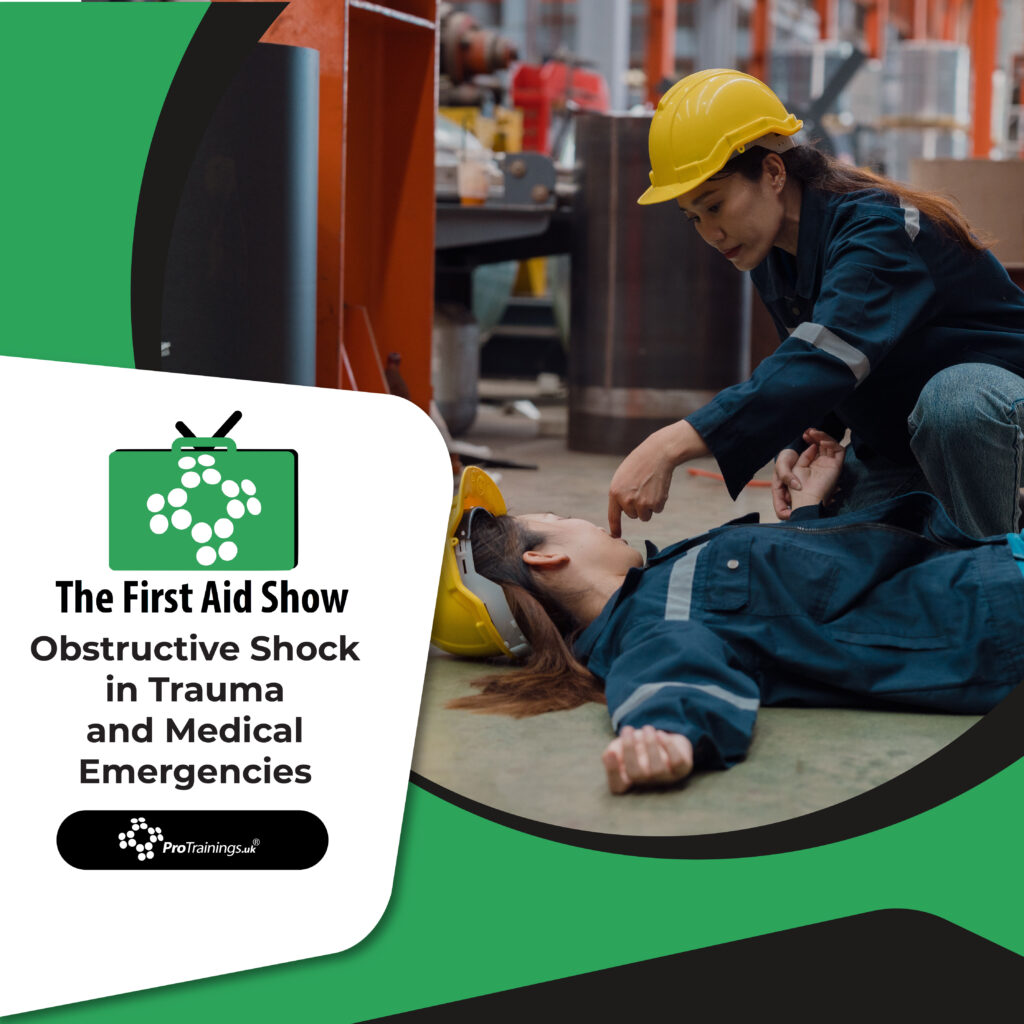
Obstructive Shock in Trauma and Medical Emergencies is a rare but extremely serious condition that requires urgent medical attention. Unlike other forms of shock, obstructive shock occurs when something physically blocks the normal flow of blood through the heart or major blood vessels. Consequently, the body cannot circulate oxygen-rich blood effectively, even if the heart muscle itself still works properly. Understanding Obstructive Shock in Trauma and Medical Emergencies helps first aiders and responders recognise the warning signs early and provide rapid support while waiting for advanced medical care.
What Happens During Obstructive Shock?
Normally, the heart pumps blood efficiently around the body. However, obstructive shock disrupts this process because a blockage prevents normal circulation.
As a result:
- Blood pressure drops significantly
- Oxygen delivery decreases
- Vital organs receive less blood flow
- The body begins to deteriorate rapidly
Without enough oxygen, organs such as the brain, kidneys, and heart cannot function properly. Therefore, obstructive shock quickly becomes a life-threatening emergency.
Common Causes of Obstructive Shock
Several serious medical conditions can trigger Obstructive Shock in Trauma and Medical Emergencies. Although the underlying causes differ, each one interferes with normal blood circulation.
Pulmonary Embolism
A pulmonary embolism occurs when a blood clot blocks the pulmonary artery carrying blood from the heart to the lungs.
Consequently:
- Oxygen exchange becomes impaired
- The heart struggles to pump effectively
- Blood circulation decreases rapidly
Large pulmonary embolisms can become fatal very quickly without emergency treatment.
Cardiac Tamponade
Cardiac tamponade develops when fluid builds up around the heart inside the pericardial sac.
As pressure increases:
- The heart cannot expand properly
- Blood filling decreases
- Cardiac output falls significantly
Therefore, even though the heart may still beat, it cannot pump enough blood around the body.
Tension Pneumothorax
A tension pneumothorax represents another major cause of obstructive shock.
This condition occurs when trapped air builds inside the chest cavity and cannot escape.
With each breath:
- Pressure inside the chest increases
- The lung collapses further
- The heart and major blood vessels become compressed
- Circulation becomes severely restricted
Consequently, tension pneumothorax can rapidly lead to cardiac arrest if emergency treatment does not occur quickly.
Signs and Symptoms of Obstructive Shock
The signs of Obstructive Shock in Trauma and Medical Emergencies often resemble other forms of shock. However, some additional clues may suggest a specific underlying cause.
Common symptoms include:
- Rapid breathing
- Fast heart rate
- Low blood pressure
- Pale or clammy skin
- Cold extremities
- Weak pulse
Additionally, the casualty may experience:
- Chest pain
- Difficulty breathing
- Abdominal pain
- Confusion or agitation
- Drowsiness or reduced responsiveness
As circulation worsens, the body attempts to preserve blood flow to vital organs. Consequently, urine output often decreases significantly.
Subcutaneous Emphysema and Chest Injuries
In certain chest injuries, trapped air may spread beneath the skin and create a crackling sensation called subcutaneous emphysema.
This sensation often feels similar to bubble wrap beneath the skin.
Importantly, subcutaneous emphysema may indicate:
- Serious chest trauma
- Lung damage
- Tension pneumothorax
Therefore, responders should always treat this sign seriously and seek immediate medical assistance.
First Aid and Emergency Response
When dealing with Obstructive Shock in Trauma and Medical Emergencies, early recognition and rapid escalation remain critical.
As a first aider, your role includes:
- Calling emergency medical services immediately
- Monitoring airway and breathing
- Helping the casualty remain calm
- Providing oxygen if trained and equipped
- Monitoring responsiveness continuously
Additionally, if breathing becomes severely compromised, prepare for rapid deterioration and possible cardiac arrest.
Why Early Recognition Matters
Obstructive shock can worsen extremely quickly. Therefore, recognising symptoms early gives emergency medical teams the best chance to treat the underlying cause before irreversible organ damage develops.
Prompt medical treatment may involve:
- Chest decompression
- Fluid drainage around the heart
- Blood clot treatment
- Advanced airway management
Consequently, rapid emergency intervention often becomes life-saving.
Final Thoughts
Ultimately, understanding Obstructive Shock in Trauma and Medical Emergencies helps first aiders recognise a serious circulation problem that may otherwise appear similar to other medical emergencies.
By identifying warning signs such as breathing difficulty, chest pain, reduced consciousness, and signs of shock, responders can act quickly and provide critical support while advanced medical help is on the way.