


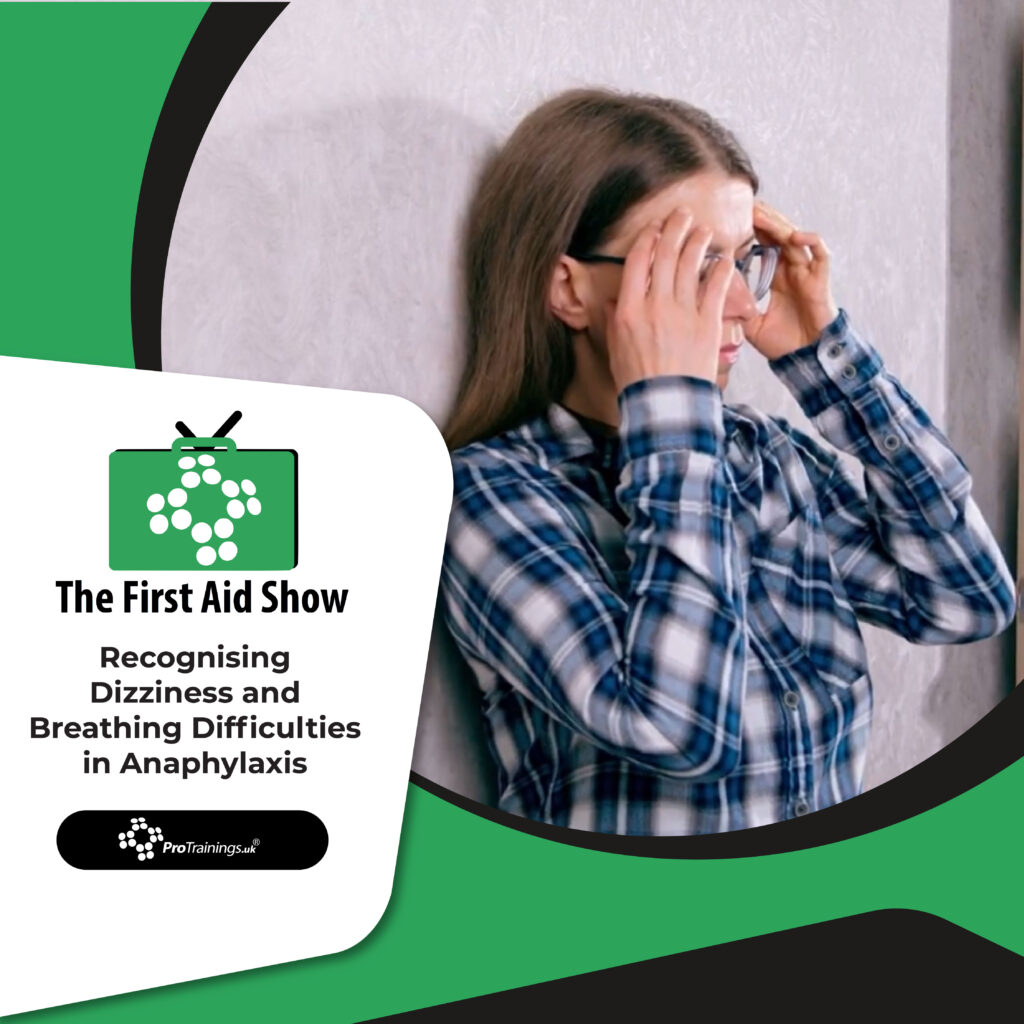

Recognising Dizziness and Breathing Difficulties in Anaphylaxis is a critical skill for first aiders, healthcare professionals, teachers, carers, and members of the public. While many allergic reactions remain mild, certain symptoms can indicate that the reaction is becoming far more serious. In particular, dizziness and breathing difficulties are important warning signs that may suggest the onset of anaphylaxis. Therefore, Recognising Dizziness and Breathing Difficulties in Anaphylaxis can help ensure rapid treatment and improve the casualty’s chances of a full recovery.
Anaphylaxis is a severe, life-threatening allergic reaction that affects multiple body systems. Most importantly, it can impact both the respiratory and circulatory systems, causing breathing problems and dangerously low blood pressure. Consequently, recognising these symptoms early and acting quickly is essential.
Why Dizziness Can Be a Serious Warning Sign
Many people associate allergic reactions with itching, rashes, or swelling. However, dizziness often indicates that the reaction is affecting the circulatory system.
During anaphylaxis, chemicals released by the immune system cause blood vessels to widen significantly. As a result, blood pressure can drop rapidly.
This sudden fall in blood pressure may cause:
- Dizziness
- Light-headedness
- Feeling faint
- Blurred vision
- Confusion
- Collapse
Furthermore, these symptoms can develop very quickly. Therefore, anyone experiencing dizziness during an allergic reaction should be monitored carefully and assessed for other signs of anaphylaxis.
Understanding Breathing Difficulties
Breathing problems are another major warning sign that an allergic reaction may be progressing to anaphylaxis.
When anaphylaxis affects the respiratory system, swelling and inflammation can narrow the airways. Consequently, breathing becomes increasingly difficult.
Common respiratory symptoms include:
- Shortness of breath
- Wheezing
- Persistent coughing
- A tight feeling in the throat
- Hoarseness of voice
- Noisy breathing
- Difficulty speaking in full sentences
Additionally, swelling of the tongue or throat can further obstruct airflow, making the situation even more dangerous.
When to Suspect Anaphylaxis
One of the key aspects of recognising dizziness and breathing Difficulties in Anaphylaxis is understanding when symptoms require emergency treatment.
You should strongly suspect anaphylaxis if someone experiencing an allergic reaction develops:
- Dizziness or fainting
- Breathing difficulties
- Swelling of the tongue or throat
- Persistent coughing
- Difficulty speaking
- Collapse or reduced responsiveness
Furthermore, symptoms can affect several body systems at the same time. For example, a casualty may have a skin rash, breathing difficulties, and dizziness simultaneously.
Immediate Actions to Take
If you suspect anaphylaxis, act immediately. Delaying treatment can allow the reaction to worsen rapidly.
You should:
- Call 999 and request an ambulance
- Help the casualty use their prescribed adrenaline medication
- Monitor their condition closely
- Remain with them until help arrives
- Prepare for the possibility of deterioration
Common adrenaline treatments include:
- EpiPen
- Jext auto-injector
- Prescribed nasal adrenaline treatments
Importantly, adrenaline can be life-saving and should be administered promptly when anaphylaxis is suspected.
The Importance of Casualty Positioning
The casualty’s position can significantly affect their condition. Therefore, it is important to position them appropriately based on their symptoms.
If they feel dizzy, faint, or light-headed:
- Lay them flat on their back
- Raise their legs if possible
- Help improve blood flow to vital organs
However, if they are struggling to breathe:
- Allow them to sit up slightly
- Encourage a position that feels comfortable
- Support their breathing as much as possible
Importantly, never force someone with significant breathing difficulties to lie flat, as this may worsen their symptoms.
Keeping the Casualty Calm
Anaphylaxis can be frightening. Consequently, many casualties become anxious or distressed.
While anxiety does not cause anaphylaxis, it can make breathing difficulties feel more severe. Therefore, providing reassurance can help reduce additional stress.
Try to:
- Speak calmly and clearly
- Offer reassurance
- Explain that help is on the way
- Stay with the casualty at all times
Furthermore, continuous monitoring allows you to identify any changes in their condition quickly.
Be Prepared for Deterioration
Even after adrenaline has been administered, symptoms can worsen. Therefore, remain vigilant and continue monitoring the casualty’s breathing and responsiveness.
Watch for:
- Increasing breathing difficulties
- Loss of consciousness
- Reduced responsiveness
- Changes in skin colour
- Signs of collapse
If the casualty becomes unresponsive and stops breathing normally, you may need to begin CPR while waiting for emergency medical services to arrive.
Final Thoughts
Recognising dizziness and breathing difficulties in Anaphylaxis can make a significant difference during a medical emergency. While dizziness may indicate a dangerous drop in blood pressure, breathing difficulties can signal airway swelling and respiratory compromise.
By identifying these warning signs early, calling 999 immediately, administering adrenaline promptly, and positioning the casualty correctly, you can provide essential support during a life-threatening allergic reaction. Ultimately, rapid recognition and decisive action remain the most effective ways to improve outcomes for people experiencing anaphylaxis.
Learn How to Respond to Allergic Reactions with Confidence
If you would like to develop your understanding of allergies and anaphylaxis, the Allergy Awareness and Anaphylaxis Level 3 (VTQ)™ Course provides comprehensive training on recognising allergic reactions, identifying the signs of anaphylaxis and responding appropriately during an emergency. The course is suitable for parents, carers, teachers, workplace first aiders and anyone who may need to support someone experiencing a severe allergic reaction.
To complement your learning, the Epi-Pen Trainer offers a safe and practical way to practise using an adrenaline auto-injector. Because the trainer contains no needle or medication, learners can build familiarity with the device and gain confidence in the administration technique before facing a real-life emergency.
By combining professional allergy awareness training with hands-on practice, you can improve your preparedness and feel more confident when responding to anaphylaxis and other serious allergic reactions.