


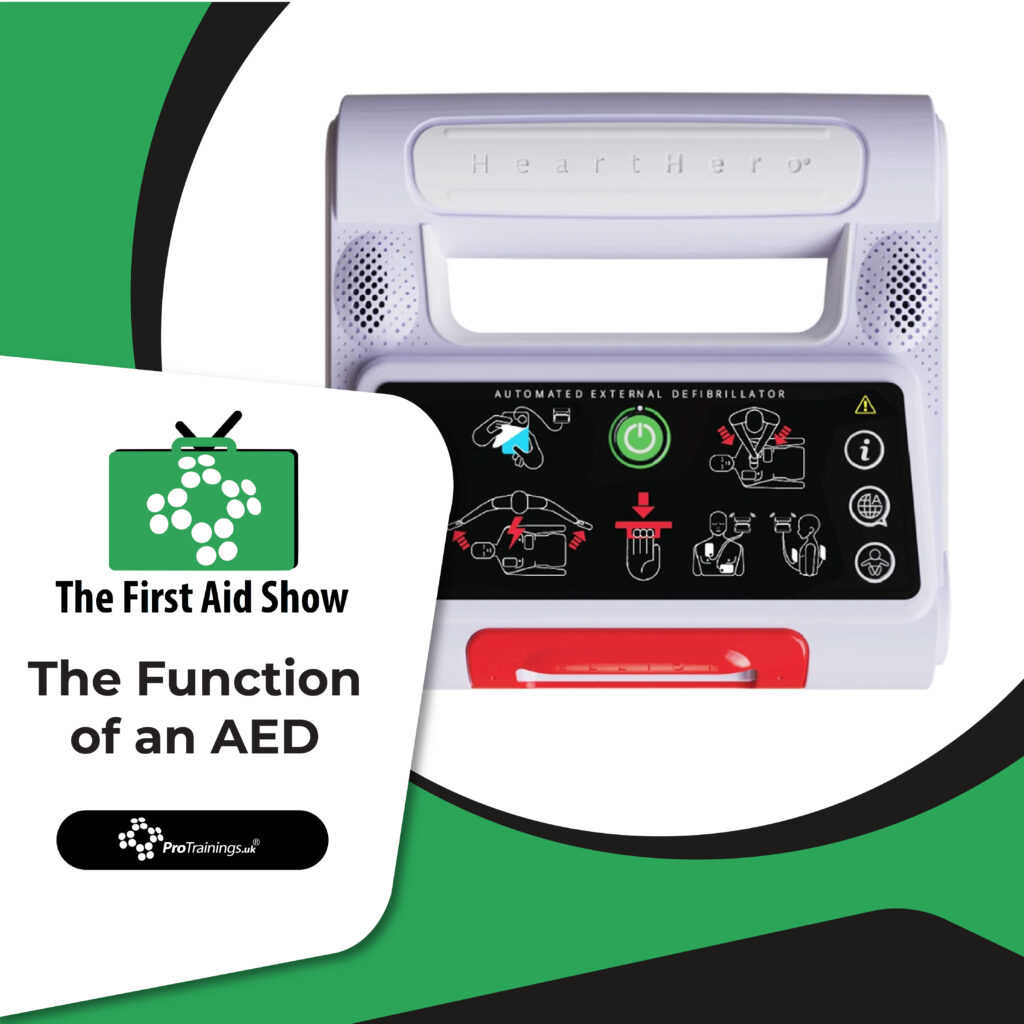

Understanding the function of an AED could one day help you save a life. An automated external defibrillator (AED) is a powerful, easy-to-use device designed to support rescuers during one of the most time-critical emergencies imaginable — sudden cardiac arrest. Knowing what the device does, and why it does it, helps remove fear and hesitation when every second counts.
What Is Sudden Cardiac Arrest?
Sudden cardiac arrest occurs when the heart stops pumping blood effectively around the body. In many cases, this happens because the heart’s electrical system becomes disorganised. Rather than maintaining a steady rhythm, the heart may begin to quiver or fire chaotically — a dangerous condition that prevents blood from reaching the brain and vital organs.
As a result, brain damage can begin within minutes. Consequently, a fast and structured response is absolutely essential. This is precisely where an AED becomes invaluable.
The Function of an AED Explained
The function of an AED is to analyse the heart’s electrical activity and determine whether a controlled electric shock is needed. Once the electrode pads are placed on the casualty’s bare chest, the device begins monitoring the heart rhythm automatically. It then assesses whether the rhythm falls into a category that can be treated with defibrillation.
Importantly, the AED does all of this without requiring the rescuer to make any clinical decisions. The device guides the user through every step with clear, calm voice prompts — making it accessible to anyone, regardless of medical background.
Shockable and Non-Shockable Rhythms
Not every cardiac arrest rhythm responds to a shock. The AED identifies two distinct categories:
- Shockable rhythms — such as ventricular fibrillation and pulseless ventricular tachycardia, where the heart’s electrical system is dangerously disorganised and a shock may restore a normal rhythm
- Non-shockable rhythms — where defibrillation will not help, and continuing high-quality CPR becomes the most important action
If the AED announces that no shock is advised, this does not indicate a fault with the device. It simply means the detected rhythm cannot be corrected through defibrillation. Nevertheless, rescuers must continue CPR without delay, as this remains the casualty’s best chance of survival in that situation.
Why Nobody Should Touch the Casualty During Analysis
During the analysis phase, the AED requires complete stillness around the casualty. Any movement or pressure on the chest can interfere with the device’s ability to accurately read the heart rhythm. This is why the AED instructs all rescuers to stand clear before proceeding.
Following this instruction carefully ensures the AED can function as intended — and protects both the casualty and those assisting throughout the process.
What Happens When a Shock Is Delivered?
When the AED detects a shockable rhythm, it will instruct the rescuer to press the shock button or, depending on the model, deliver the shock automatically. The shock briefly interrupts the heart’s abnormal electrical activity. This gives the heart’s natural pacemaker the opportunity to reset and restore an effective rhythm.
Furthermore, the AED will immediately prompt rescuers to resume CPR after the shock is delivered. CPR keeps oxygenated blood circulating to the brain and vital organs while the heart attempts to stabilise. Therefore, minimising any pause in compressions remains critically important throughout the entire process.
The AED Continues to Monitor and Guide
Moreover, the AED does not stop working after the first shock. It continues to monitor the casualty’s heart rhythm after every CPR cycle and advises on the next appropriate action. Whether that means delivering another shock or continuing compressions, the device guides the rescuer clearly at every stage.
Ultimately, the AED will only recommend a shock when it is clinically safe and appropriate to do so. Rescuers can trust the device completely — their role is simply to follow the prompts and maintain high-quality CPR between each analysis cycle.
Final Thoughts
Understanding the function of an AED is one of the most practical steps anyone can take towards being prepared for a cardiac arrest emergency. These devices are built for use by everyone — not just healthcare professionals. By working alongside CPR, an AED gives the casualty the strongest possible chance of survival.
If you would like to build your confidence with hands-on practice, consider booking a first aid training course that covers both CPR and AED use. Being prepared today could make all the difference tomorrow.