


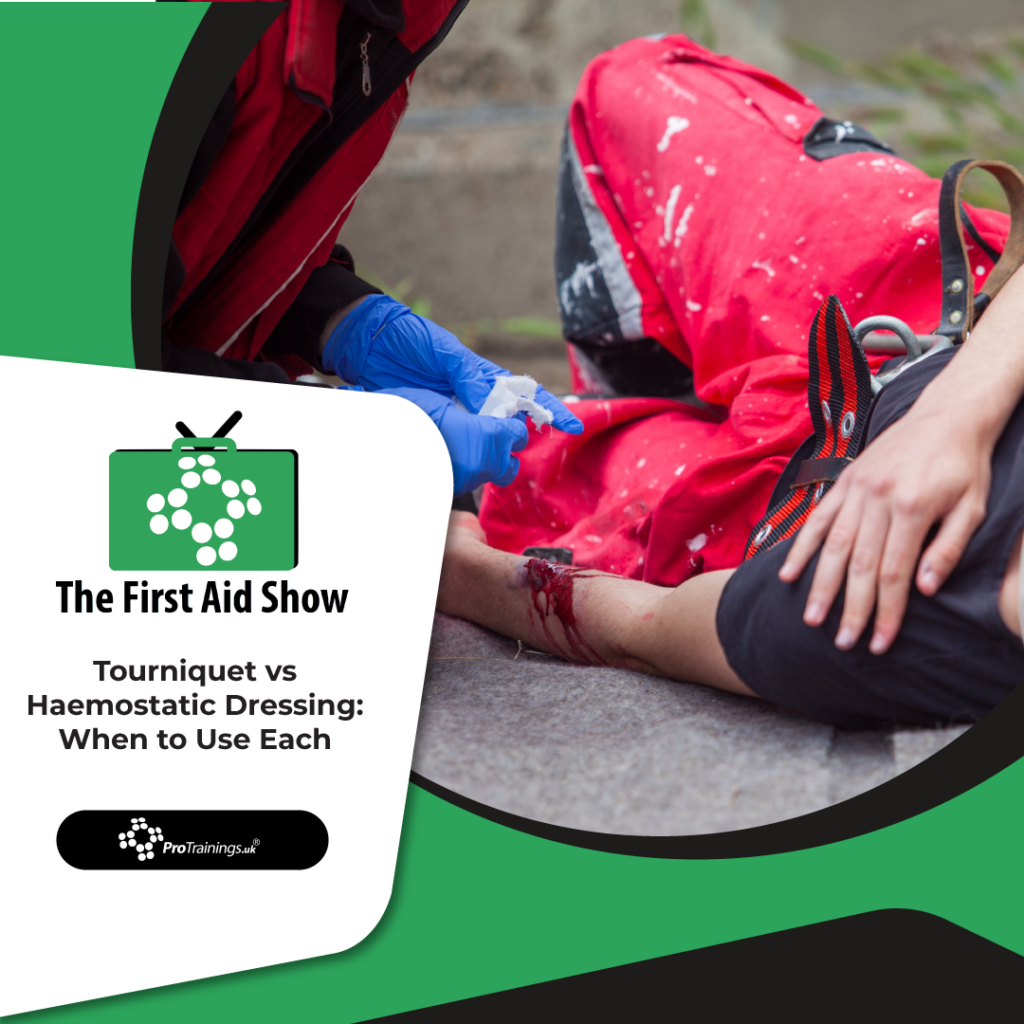
Tourniquet vs Haemostatic Dressing is an important topic in modern trauma care and bleeding control. Both options can help manage severe bleeding; however, each one works differently and suits different types of injuries. Therefore, understanding the differences between a Tourniquet vs Haemostatic Dressing can help first aiders make faster and more effective decisions during an emergency.
Firstly, direct pressure should always remain your initial response to severe bleeding. In many situations, direct pressure alone can control the bleed successfully. However, if bleeding continues or becomes life-threatening, you may need to use either a haemostatic dressing, a tourniquet, or sometimes both together.
When to Use a Tourniquet
Tourniquets are designed specifically for severe bleeding from limbs, meaning arms and legs. Consequently, they work extremely well for catastrophic limb injuries where blood loss needs immediate control.
However, tourniquets have limitations. For example, you cannot place them over joints such as:
- Elbows
- Knees
- Shoulders
- Hips
Instead, you must place the tourniquet above the injury site while avoiding joints completely.
If one tourniquet does not fully stop the bleeding, you may need to apply a second one higher up the limb. Furthermore, once you apply a tourniquet, you should leave it in place until medical professionals remove it.
Key Tourniquet Points
- Use only on limbs
- Place above the wound
- Never place over a joint
- Tighten until bleeding stops
- Do not remove once applied
Importantly, modern evidence shows that properly applied tourniquets save lives. Therefore, first aiders should never hesitate to use one when severe bleeding threatens life.
When to Use a Haemostatic Dressing
In contrast, haemostatic dressings offer far greater flexibility because you can use them on many different areas of the body. For example, they work well for:
- Deep wounds
- Junctional injuries
- Head wounds
- Torso injuries
- Surface bleeding
Additionally, haemostatic dressings actively support the body’s clotting process. As a result, they help control bleeding from both inside and outside the wound.
Products such as WoundClot come in multiple sizes and formats, including:
- 10 x 10 cm
- 8 x 20 cm
- 20 x 30 cm
- 8 x 100 cm Z-fold dressings
The Z-fold version works especially well for wound packing because it allows the responder to fill deep wound cavities effectively.
Wound Packing and Bleeding Control
When comparing Tourniquet vs Haemostatic Dressing, wound packing often becomes the deciding factor.
For example, if a casualty has a deep laceration on the leg, you may first attempt to:
- Pack the wound with a haemostatic dressing
- Apply firm direct pressure
- Secure it with a trauma dressing
Consequently, this approach may stop the bleeding without needing a tourniquet at all.
However, if severe bleeding continues through the dressing, then adding a tourniquet becomes the next step.
Using Both Together
Importantly, haemostatic dressings and tourniquets do not compete against each other. Instead, they often work together.
For instance:
- Pack the wound with a haemostatic dressing
- Apply a trauma dressing
- Add a tourniquet if bleeding persists
Therefore, combining both methods can provide extremely effective bleeding control during major trauma incidents.
Advantages of Modern Haemostatic Dressings
Newer-generation haemostatic products such as WoundClot offer additional versatility. Unlike some older haemostatic agents, WoundClot can:
- Be applied directly onto surface wounds
- Be packed into deeper wounds
- Support clotting without heavy pressure
- Work alongside conventional dressings
As a result, these products often provide easier and more flexible bleeding management in emergency situations.
Choosing the Right Option
Ultimately, deciding between a Tourniquet vs Haemostatic Dressing depends on several factors, including:
- The location of the injury
- The severity of the bleeding
- Whether direct pressure works
- The equipment available
In many cases, responders should first attempt direct pressure and haemostatic treatment before moving to a tourniquet. Nevertheless, if bleeding becomes uncontrollable or life-threatening, applying a tourniquet quickly can save a life.
Final Thoughts
Understanding the differences between Tourniquet vs Haemostatic Dressing allows first aiders to respond more confidently during severe bleeding emergencies. While tourniquets provide rapid control for limb injuries, haemostatic dressings offer flexible treatment for a wider range of wounds.
Most importantly, both tools play a vital role in trauma care. By learning how and when to use each option correctly, first aiders can improve outcomes and potentially save lives before emergency services arrive.