


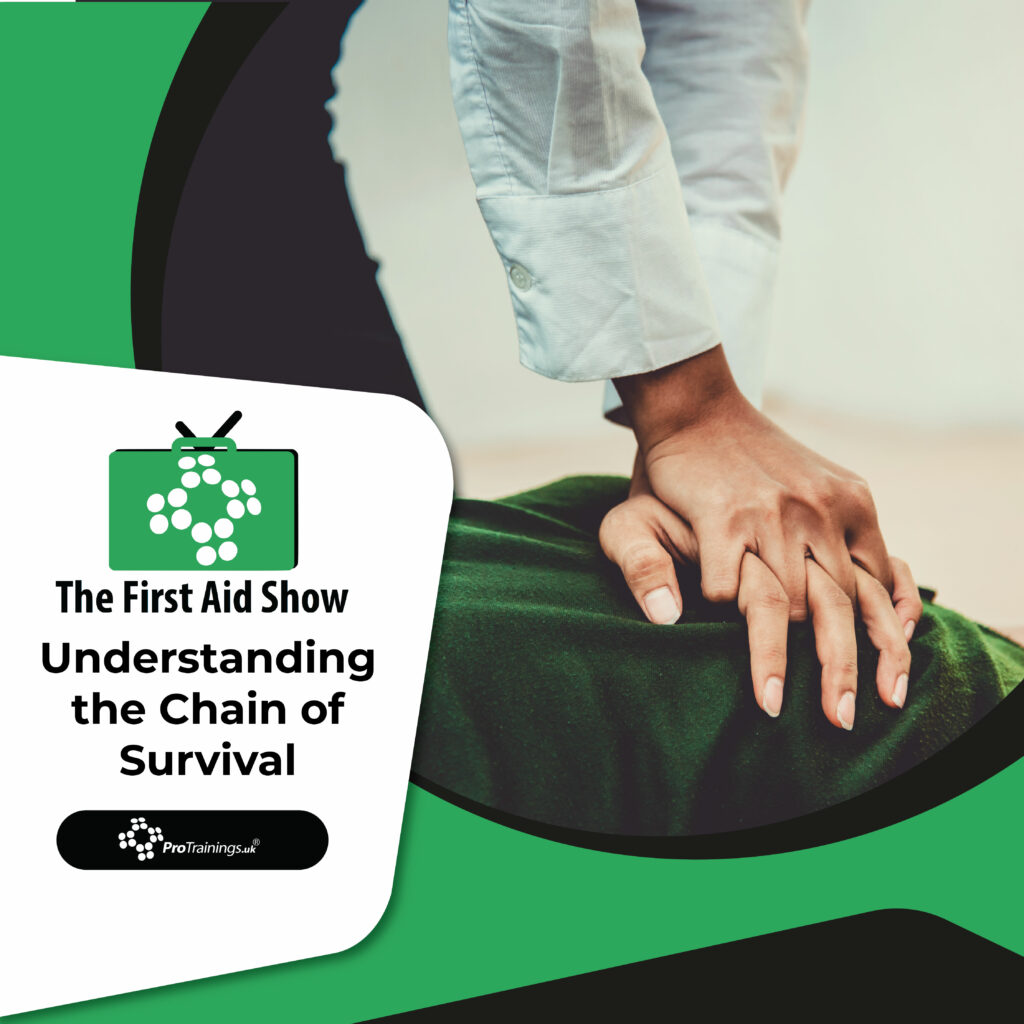
Understanding the Chain of Survival is essential for anyone who wants to improve outcomes following cardiac arrest. From the very first moment something goes wrong, every action taken – and every second saved – can dramatically influence survival and long-term recovery. The Chain of Survival clearly shows that saving a life is not one single action, but a sequence of critical steps that must happen quickly and effectively.
Why the Chain of Survival Matters
Firstly, the Chain of Survival exists to give a cardiac arrest patient the best possible chance of surviving and returning to a good quality of life. Each link supports the next. Therefore, if one link fails or is delayed, the entire outcome can suffer. For this reason, understanding how each stage works helps responders, colleagues, and bystanders act with confidence.
Link One: Early Recognition and Calling for Help
The first link focuses on early recognition and rapid activation of emergency medical services. By spotting the warning signs early, it may even be possible to prevent cardiac arrest from occurring.
Key warning signs include:
- Sudden collapse
- Severe chest pain
- Difficulty breathing
- Sudden unresponsiveness
As soon as someone appears seriously unwell, calling for help becomes critical. Early contact with emergency services ensures advanced care is already on the way. In some cases, rapid intervention by professionals may stabilise the patient before their condition worsens.
Link Two: Early CPR and Defibrillation
The second link is often the most well-known part of Understanding the Chain of Survival. If a person becomes unresponsive and is not breathing normally, they are in cardiac arrest and need immediate action.
At this stage:
- Start CPR without delay
- Deliver high-quality chest compressions
- Use an AED as soon as it becomes available
Effective chest compressions keep oxygenated blood flowing to the brain and vital organs. Meanwhile, early defibrillation gives the heart the best chance of restarting with a normal rhythm. Modern defibrillators guide the rescuer step by step, which means anyone can use them safely and effectively.
Link Three: Advanced and Post-Resuscitation Care
Once the heart restarts, known as return of spontaneous circulation (ROSC), care must continue immediately. This phase focuses on stabilisation and preventing further damage.
This stage includes:
- Maintaining oxygenation and ventilation
- Supporting blood pressure and circulation
- Treating abnormal heart rhythms
- Identifying and correcting reversible causes
By protecting the brain and supporting the heart, this link plays a crucial role in improving long-term outcomes.
Link Four: Survival and Recovery
The final link moves beyond survival alone and focuses on recovery and quality of life. Long-term care may involve rehabilitation, ongoing cardiac treatment, and psychological support.
This stage may include:
- Neurological and specialist medical care
- Physical rehabilitation
- Management of long-term conditions
- Emotional and psychological recovery
Every Link Counts
Ultimately, Understanding the Chain of Survival shows that saving lives requires a complete system, not a single action. When early recognition, rapid CPR, effective defibrillation, and strong post-resuscitation care all work together, more people survive and return to their families and communities with positive long-term outcomes.