


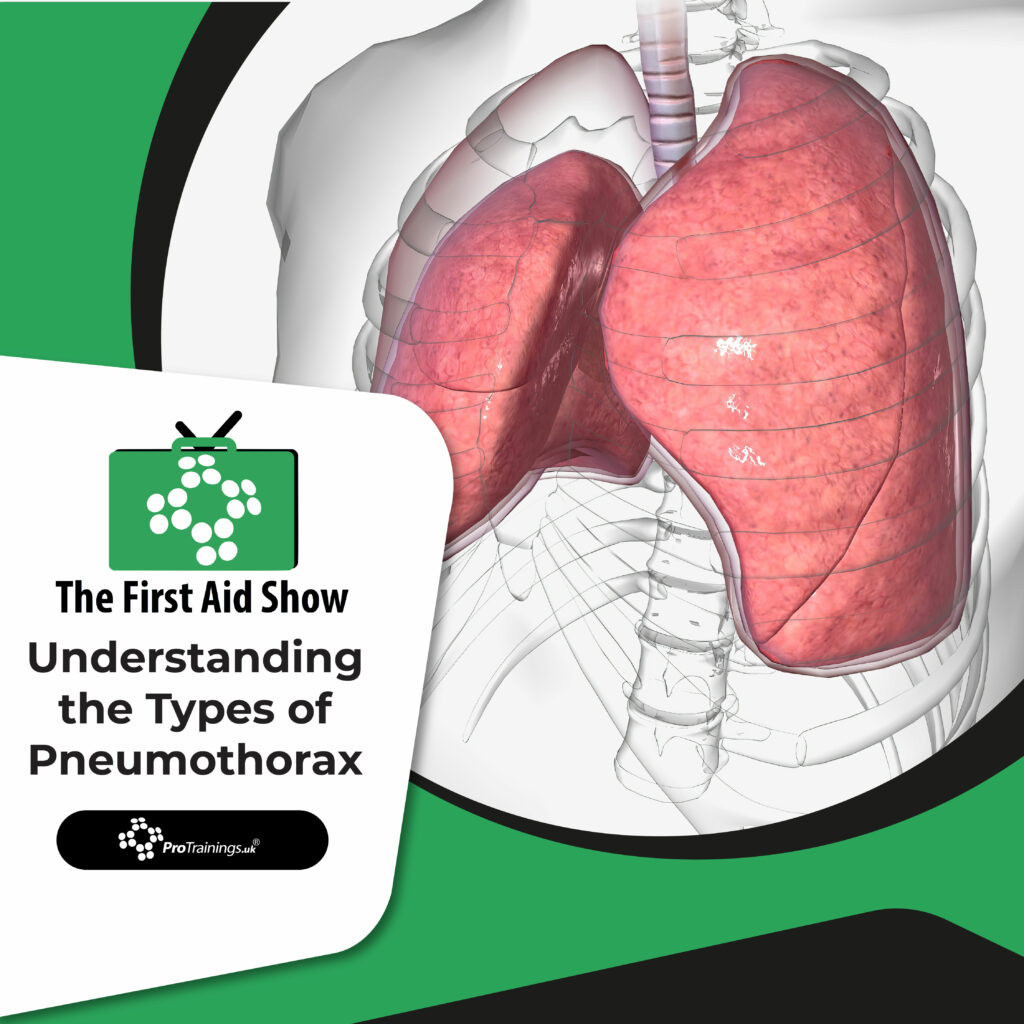
Understanding the Types of Pneumothorax is important for first aiders, first responders, and healthcare professionals. A pneumothorax, often referred to as a collapsed lung, can develop in several different ways depending on the underlying cause. Therefore, learning about Understanding the Types of Pneumothorax helps responders recognise symptoms earlier, identify possible causes, and seek urgent medical support before the condition worsens.
Firstly, a pneumothorax occurs when air enters the pleural space between the lung and chest wall. As a result, pressure builds around the lung and prevents it from expanding properly during breathing. Although some cases remain relatively mild, others can progress rapidly into life-threatening emergencies.
Primary Spontaneous Pneumothorax
One common type is a primary spontaneous pneumothorax. This develops without any obvious injury or trauma to the chest.
Typically, this happens when small air blisters, known as blebs, rupture on the surface of the lung. Consequently, air leaks into the pleural cavity and causes part of the lung to collapse.
This type often affects:
- Tall, slim young adults
- Otherwise healthy individuals
- People who smoke
However, despite being more common in these groups, a primary spontaneous pneumothorax can develop in almost anyone.
Symptoms often appear suddenly and may include:
- Sharp chest pain
- Sudden shortness of breath
- Difficulty taking deep breaths
Secondary Spontaneous Pneumothorax
Another important category when Understanding the Types of Pneumothorax is the secondary spontaneous pneumothorax.
Unlike primary spontaneous cases, this type develops in people who already have underlying lung disease.
Common conditions linked to secondary pneumothorax include:
- Chronic obstructive pulmonary disease (COPD)
- Severe asthma
- Lung infections
- Cystic fibrosis
Because the lungs are already weakened, even a relatively small air leak can create serious breathing difficulties. Consequently, these patients often deteriorate more quickly and require urgent medical care.
Traumatic Pneumothorax
A traumatic pneumothorax occurs after an injury to the chest.
For example, causes may include:
- Road traffic collisions
- Falls from height
- Sports injuries
- Penetrating wounds such as stab injuries
Additionally, broken ribs can puncture the lung and allow air to escape into the pleural space.
As a result, the casualty may experience:
- Chest pain
- Breathing difficulties
- Rapid breathing
- Uneven chest movement
Importantly, traumatic chest injuries always require careful assessment because complications can develop quickly.
Open Pneumothorax
An open pneumothorax develops when a wound in the chest wall allows air to move directly in and out of the chest cavity.
This injury is sometimes called a sucking chest wound because responders may hear air moving through the wound during breathing.
Open pneumothorax can occur following:
- Penetrating chest trauma
- Gunshot wounds
- Severe impalement injuries
Consequently, this condition can seriously affect breathing and oxygen levels.
First aiders should seek emergency medical assistance immediately and follow appropriate trauma care procedures.
Tension Pneumothorax
The most serious condition when Understanding the Types of Pneumothorax is the tension pneumothorax.
This life-threatening emergency occurs when air enters the chest cavity but cannot escape.
With each breath:
- Pressure inside the chest increases
- The lung collapses further
- The heart and major blood vessels become compressed
- Blood circulation becomes restricted
Consequently, the casualty can deteriorate very rapidly.
Signs of tension pneumothorax may include:
- Severe breathing difficulty
- Extreme distress or anxiety
- Rapid heart rate
- Pale or blue skin
- Reduced consciousness
This condition requires immediate emergency medical intervention.
Recognising the Warning Signs
Regardless of the type, early recognition remains extremely important.
First aiders should always seek urgent medical help if someone develops:
- Sudden chest pain
- Difficulty breathing
- Uneven chest movement
- Rapid breathing
- Signs of worsening distress
Furthermore, casualties often feel anxious because breathing becomes uncomfortable and difficult.
First Aid Support for Pneumothorax
While waiting for emergency services:
- Keep the casualty calm
- Help them remain still
- Encourage an upright or semi-upright position if comfortable
- Monitor breathing and responsiveness continuously
Importantly, avoid unnecessary movement because this may worsen breathing difficulties.
Final Thoughts
Ultimately, Understanding the Types of Pneumothorax helps first aiders identify serious chest emergencies more quickly. Although different types develop in different ways, all pneumothorax cases can affect breathing and oxygen delivery significantly.
By recognising symptoms early and arranging urgent medical treatment, first responders can help reduce complications and improve the casualty’s chances of recovery.