


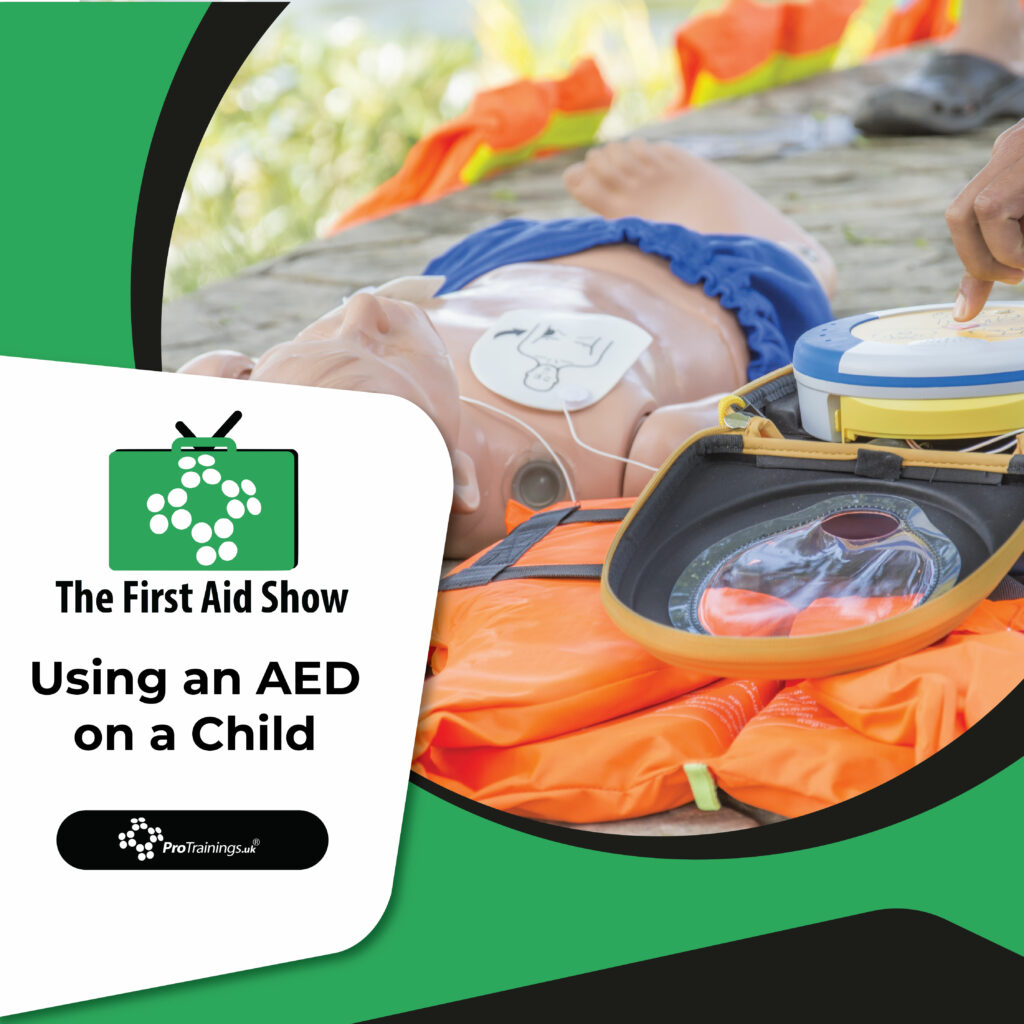

Using an AED on a child can feel overwhelming, especially in an emergency. However, quick action, calm decision-making, and early CPR dramatically improve a child’s chance of survival. From the very first moment you recognise that a child is unresponsive and not breathing normally, every second counts. Therefore, understanding the correct steps in advance can make all the difference.
Who Is Defined as a Child?
In resuscitation guidance, a child is defined as being between one and 12 years old. Consequently, this covers a wide range of sizes and body weights. Because of this variation, you must adjust pad placement and consider paediatric settings when available.
Immediate Actions: Call for Help and Start CPR
Firstly, if you find a child unresponsive, call 999 immediately and request an ambulance. If you are unsure whether the child is breathing normally, always assume they are not. At the same time, put your phone on speaker so the call handler can guide you through each step.
Next, begin CPR without delay. In children, cardiac arrest often results from breathing problems. Therefore, start with:
- Five rescue breaths
- Then begin chest compressions at 100 to 120 per minute
- Compress to around one-third of the chest depth
- Allow full chest recoil after each compression
Continue CPR using a 15 compressions to 2 breaths ratio. Importantly, do not pause compressions while someone retrieves the defibrillator.
Using an AED on a Child When It Arrives
As soon as the device arrives, switch it on and follow the voice and visual prompts carefully. Modern units guide you step by step, which makes using an AED on a child far more straightforward than many people expect.
If the device has a paediatric mode or paediatric pads, use them. These reduce the shock energy to a level suitable for smaller bodies. However, if paediatric options are unavailable, use adult pads and settings immediately. Never delay defibrillation while searching for alternatives.
Correct Pad Placement
Before attaching pads, ensure the child’s chest is bare and dry.
For children under approximately 25 kg (often under 8 years old):
- Place one pad in the centre of the chest
- Place the second pad on the back between the shoulder blades
This front-and-back placement ensures the shock passes effectively through the heart.
For larger children (over approximately 25 kg):
- Place one pad on the centre of the chest
- Place the second pad on the back between the shoulder blades
Safety During Shock Delivery
When the device announces “stand clear,” immediately ensure nobody is touching the child. If a shock is advised, keep everyone clear until it is delivered. Then, without hesitation, restart chest compressions.
Continue Until Help Arrives
Keep performing CPR and following device prompts until:
- Professional help takes over
- The child shows clear signs of life
- You become physically unable to continue
Ultimately, using an AED on a child is both safe and highly effective. The device will only deliver a shock if it detects a shockable rhythm. Therefore, act confidently and without delay. Early CPR combined with rapid defibrillation gives children the very best chance of recovery and survival.