


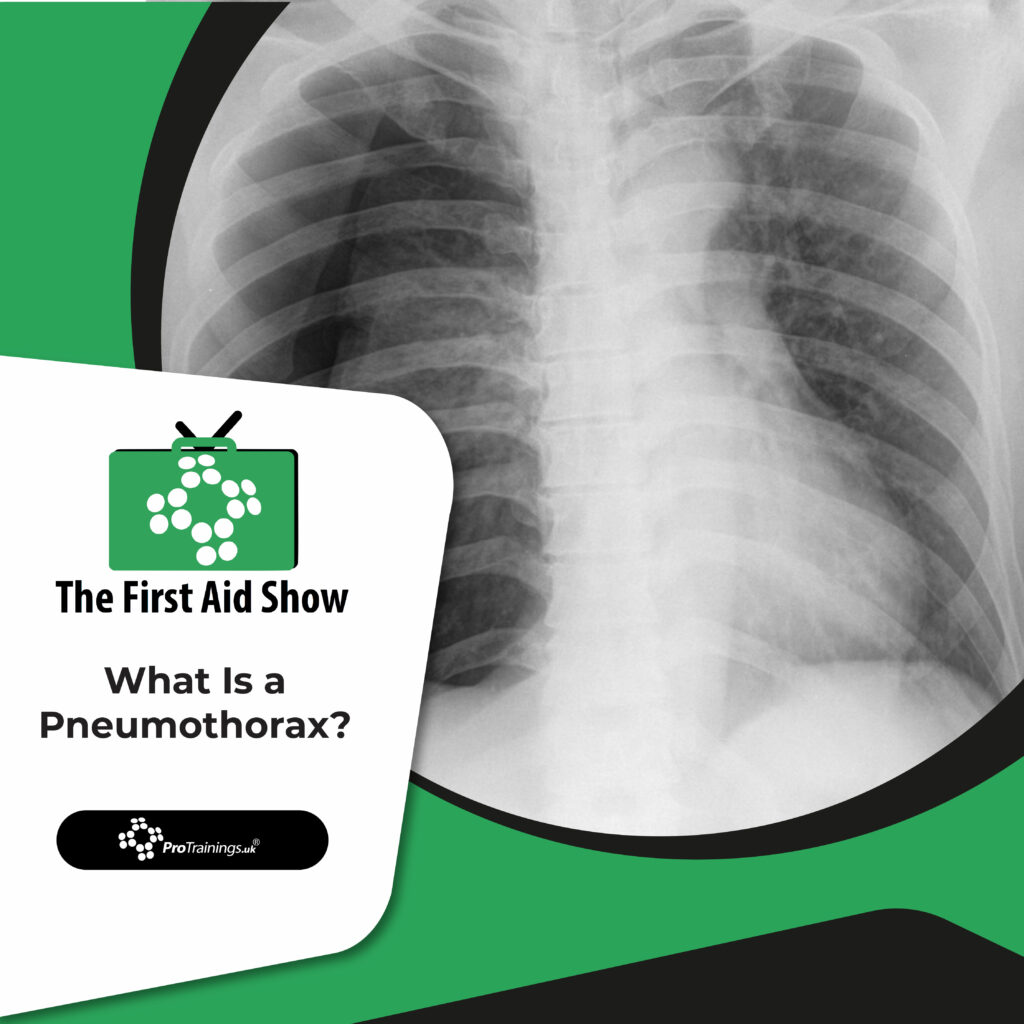

What Is a Pneumothorax is an important question for first aiders, healthcare professionals, and anyone wanting to understand chest injuries and breathing emergencies. A pneumothorax, often called a collapsed lung, occurs when air enters the space between the lung and the chest wall. Consequently, this trapped air places pressure on the lung and prevents it from expanding properly during breathing. Understanding What Is a Pneumothorax can help people recognise symptoms early and seek urgent medical attention before the condition becomes more serious.
What Happens During a Pneumothorax?
Inside the chest, the lungs normally expand smoothly as we breathe. However, a pneumothorax disrupts this process.
When air enters the pleural space, which is the area between the lung and chest wall:
- The lung becomes compressed
- The affected lung cannot fully expand
- Breathing becomes more difficult
- The body receives less oxygen
As a result, the casualty may experience pain, breathlessness, and increasing respiratory distress.
What Causes This?
A pneumothorax can develop for several different reasons. In some cases, trauma causes the condition. However, it can also occur spontaneously without any obvious injury.
Traumatic Causes
Chest injuries commonly linked to pneumothorax include:
- Rib fractures
- Penetrating chest wounds
- Heavy blows to the chest
- Crush injuries
Furthermore, trauma may allow air to leak directly into the pleural cavity, which then places pressure on the lung.
Spontaneous Pneumothorax
In other situations, pneumothorax develops spontaneously. This can occur in:
- Tall young adults
- People who smoke
- Individuals with lung conditions such as COPD
- People with underlying lung weakness
Consequently, even healthy individuals can occasionally develop a collapsed lung without warning.
Common Signs and Symptoms
Recognising symptoms early remains extremely important. Therefore, first aiders should watch carefully for signs of breathing difficulties and chest pain.
Common symptoms include:
- Sudden chest pain
- Shortness of breath
- Painful breathing
- Rapid breathing
- Shallow breaths
- Anxiety or distress
Additionally, the casualty may develop:
- A dry cough
- Fatigue
- Chest tightness
- Uneven chest movement
For example, one side of the chest may expand less than the other while breathing.
What Is a Tension Pneumothorax?
Although many simple pneumothorax cases remain stable initially, the condition can worsen if more air continues entering the chest cavity.
In severe cases, a pneumothorax may develop into a tension pneumothorax, which is a life-threatening emergency.
During a tension pneumothorax:
- Pressure inside the chest increases rapidly
- The affected lung collapses further
- The heart and major blood vessels become compressed
- Blood circulation becomes impaired
Consequently, the casualty may deteriorate very quickly and require immediate emergency treatment.
First Aid for a Pneumothorax
Understanding What Is a Pneumothorax also involves knowing how to respond safely.
If you suspect a pneumothorax:
- Call emergency services immediately
- Help the casualty remain calm
- Encourage them to stay still
- Place them in an upright or semi-upright position if comfortable
- Monitor breathing and responsiveness continuously
Importantly, the upright position often helps reduce breathing difficulty by allowing the lungs to expand more easily.
Furthermore, avoid giving the casualty anything to eat or drink while waiting for medical professionals.
Why Early Recognition Matters
Early recognition and prompt treatment significantly improve outcomes. Therefore, first aiders should never ignore unexplained chest pain or sudden breathing difficulty, especially after trauma.
Fast medical assessment can:
- Prevent the condition worsening
- Reduce complications
- Support oxygen delivery
- Improve recovery
As a result, recognising symptoms quickly can make a major difference during emergencies.
Final Thoughts
Ultimately, understanding what a Pneumothorax is helps first aiders and members of the public recognise the warning signs of a collapsed lung early. Although some cases remain mild initially, others can rapidly progress into life-threatening emergencies.
By identifying symptoms quickly, seeking urgent medical help, and supporting the casualty appropriately, first aiders can help reduce complications and improve the casualty’s chances of recovery.