


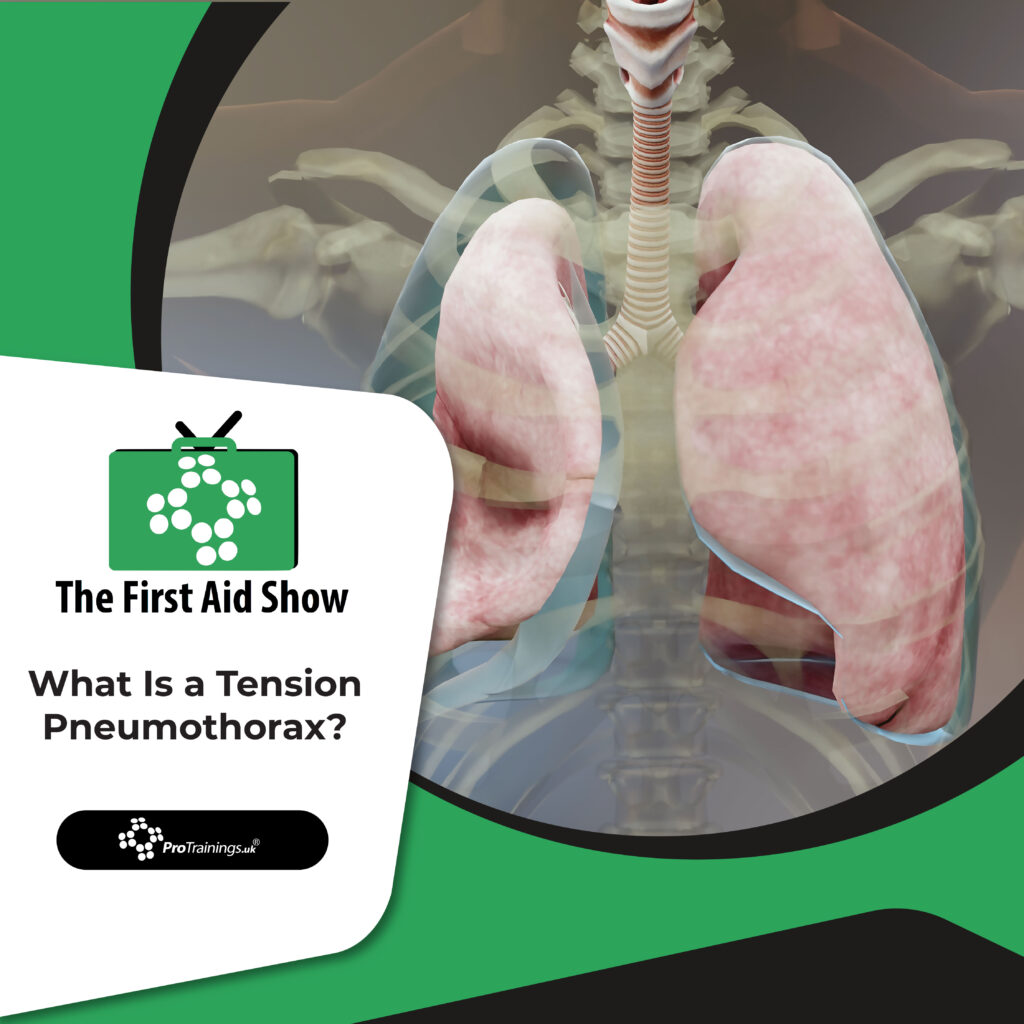

What Is a Tension Pneumothorax is an important question for first aiders, emergency responders, and healthcare professionals because this condition can become fatal very quickly without treatment. A tension pneumothorax occurs when air becomes trapped inside the chest cavity and cannot escape. Consequently, pressure builds inside the chest and begins compressing the lungs, heart, and major blood vessels. Understanding What Is a Tension Pneumothorax helps responders recognise the warning signs early and seek immediate emergency medical support.
How a Tension Pneumothorax Develops
Normally, the lungs sit inside the chest within a thin space called the pleural cavity. During breathing, the lungs expand and contract smoothly as air moves in and out.
However, when trauma damages the chest or lung tissue, air can leak into the pleural space.
This may happen because of:
- Penetrating chest injuries
- Rib fractures
- Road traffic collisions
- Blast injuries
- Severe blunt trauma
If the leaked air continues entering the chest but cannot escape, pressure increases with every breath. Consequently, this trapped air transforms a simple pneumothorax into a tension pneumothorax, which is a life-threatening emergency.
Why a Tension Pneumothorax Is So Dangerous
As pressure builds inside the chest, the affected lung begins collapsing further. Additionally, the increasing pressure pushes the heart and major blood vessels toward the opposite side of the chest.
As a result:
- Breathing becomes severely restricted
- Oxygen levels fall rapidly
- Blood circulation becomes impaired
- The heart struggles to pump effectively
Consequently, the casualty may develop obstructive shock and, without urgent treatment, cardiac arrest may follow.
Common Signs and Symptoms
Recognising What Is a Tension Pneumothorax also involves identifying the warning signs quickly.
Common symptoms include:
- Sudden severe chest pain
- Difficulty breathing
- Rapid, shallow breathing
- Extreme distress or anxiety
Furthermore, the casualty may appear:
- Pale
- Cold or clammy
- Bluish around the lips or fingertips
- Increasingly confused or drowsy
As oxygen levels continue falling, the casualty’s level of responsiveness may deteriorate rapidly.
Uneven Chest Movement
One particularly important sign involves uneven chest expansion.
You may notice:
- One side of the chest rising less than the other
- Reduced movement on the injured side
- Visible breathing difficulty
Therefore, responders should carefully observe chest movement when assessing breathing problems after chest trauma.
Subcutaneous Emphysema
In some cases, air may spread beneath the skin around the chest, neck, or shoulders.
This condition, known as subcutaneous emphysema, creates a crackling or popping sensation beneath the skin.
It often feels similar to:
- Bubble wrap
- Crispy tissue paper
Importantly, subcutaneous emphysema may indicate serious chest trauma and requires urgent medical attention.
What Causes a Tension Pneumothorax?
Several injuries and medical situations may lead to tension pneumothorax.
Common causes include:
- Penetrating chest wounds
- Broken ribs puncturing the lung
- Severe blunt chest trauma
- Mechanical ventilation complications
Additionally, although trauma causes many cases, some people may develop spontaneous pneumothorax because of underlying lung disease.
First Aid for a Tension Pneumothorax
When dealing with What Is a Tension Pneumothorax, rapid emergency action becomes essential.
If you suspect this condition:
- Call emergency services immediately
- Keep the casualty calm
- Help them stay in a position that eases breathing
- Monitor breathing and responsiveness continuously
In many cases, casualties feel more comfortable sitting upright or semi-upright because this position helps reduce breathing difficulty.
Additionally, avoid unnecessary movement because this may worsen respiratory distress.
Why Early Recognition Saves Lives
A tension pneumothorax can deteriorate extremely quickly. Therefore, recognising symptoms early provides the best chance of survival.
Emergency medical treatment may involve:
- Needle decompression
- Chest drain insertion
- Oxygen therapy
- Advanced trauma management
Consequently, rapid treatment relieves pressure inside the chest and allows the lungs and heart to function more effectively again.
Final Thoughts
Ultimately, understanding What Is a Tension Pneumothorax helps first aiders recognise one of the most serious chest emergencies. Although symptoms may begin with chest pain and breathlessness, the condition can rapidly progress into shock and cardiac arrest if treatment becomes delayed.
By recognising the warning signs quickly, calling emergency services immediately, and supporting the casualty appropriately, responders can help improve the casualty’s chances of survival while waiting for advanced medical care.