


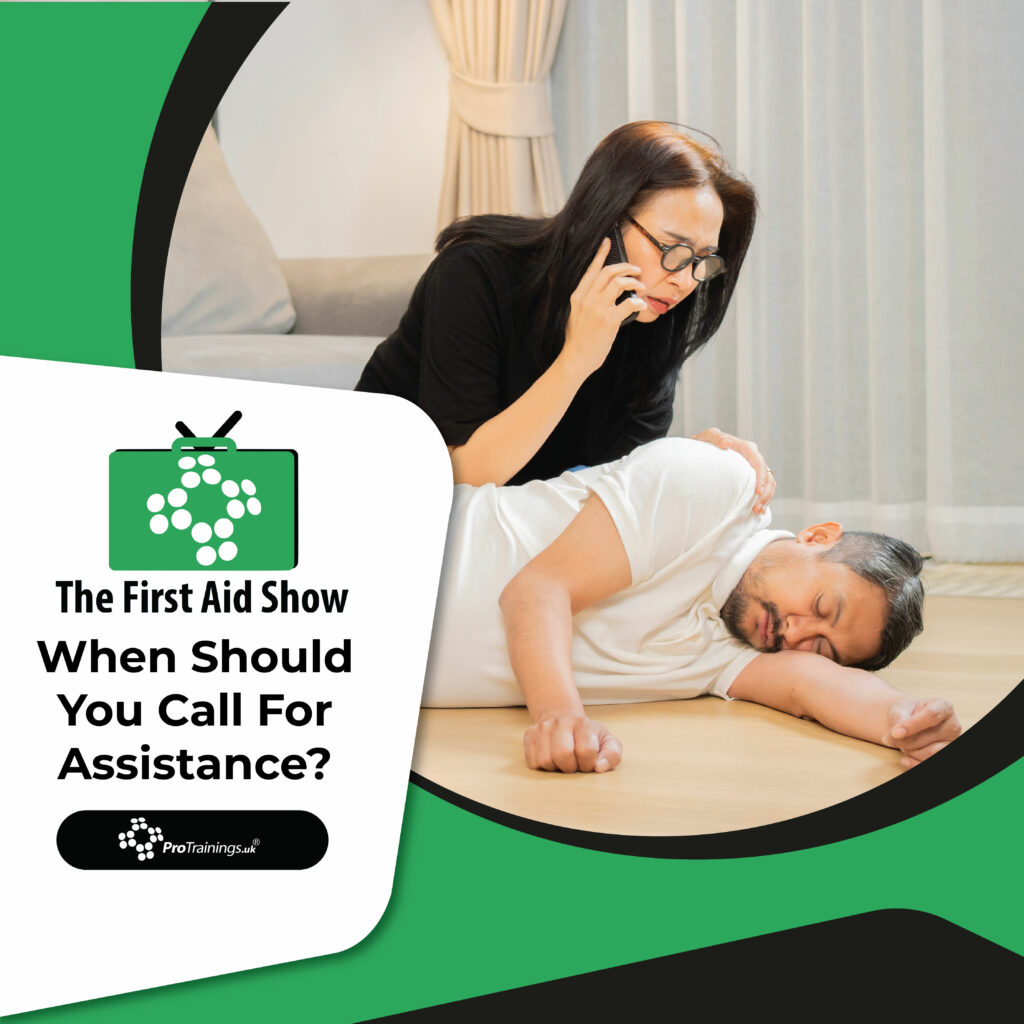

When Should You Call For Assistance?
As soon as you realise the casualty is unresponsive, you must act quickly and decisively. Therefore, you should immediately think about When Should You Call For Assistance? and reach for your phone. Call emergency services at once and ask for an ambulance, keeping your phone on speakerphone so your hands remain free. If someone else is with you, ask them to make the call so you can begin CPR straight away. However, if you are alone, call first, then start CPR without hesitation. Every second matters, and early action dramatically increases the casualty’s chance of survival.
Why Early Assistance Matters
Rescuers need to get help as quickly as possible when someone collapses or appears unconscious. Furthermore, calling for help early allows the EMS dispatcher to assess the situation and decide what level of support you need. They can determine this far faster than a rescuer trying to interpret the situation alone. Consequently, the sooner emergency responders travel to the scene, the greater the casualty’s chance of surviving.
Additionally, if you avoid calling for help, CPR alone cannot give the casualty the best possible outcome because professional support and an AED remain unavailable. Moreover, a person’s survival chance drops by around 10% for every minute the AED is delayed. Therefore, ensuring EMS are already on the way, combined with continuous and effective CPR, significantly increases the casualty’s chances.
What To Do When Multiple Rescuers Are Present
When more than one rescuer is available, you can divide the responsibilities clearly and effectively:
- Rescuer 1: Begin CPR immediately.
- Rescuer 2: Call for help and try to locate an AED.
This teamwork ensures continuous care and reduces delays.
What To Do When You Are Alone
If you are alone, do not leave the casualty at any point. Instead, stay with them and continue CPR. EMS will bring an AED to you, and because you have already been providing CPR, the AED will have a better chance of restarting the heart. Additionally, to minimise interruptions during CPR, you may be able to carry an infant or small child while calling for help, although you must always prioritise effective compressions.
Using the Dispatcher for Support
When you call the EMS, keep your phone on speakerphone so the dispatcher can guide you through every step. They can coach you through full CPR or chest-compressions-only CPR, depending on your confidence and the situation. Furthermore, they can reassure you and help maintain your rhythm, which is especially important when stress begins to build.
Ultimately, acting quickly, staying calm, and knowing exactly When Should You Call For Assistance? will dramatically improve the casualty’s chance of survival. With early intervention, clear communication, and strong CPR, you can make a life-saving difference.