


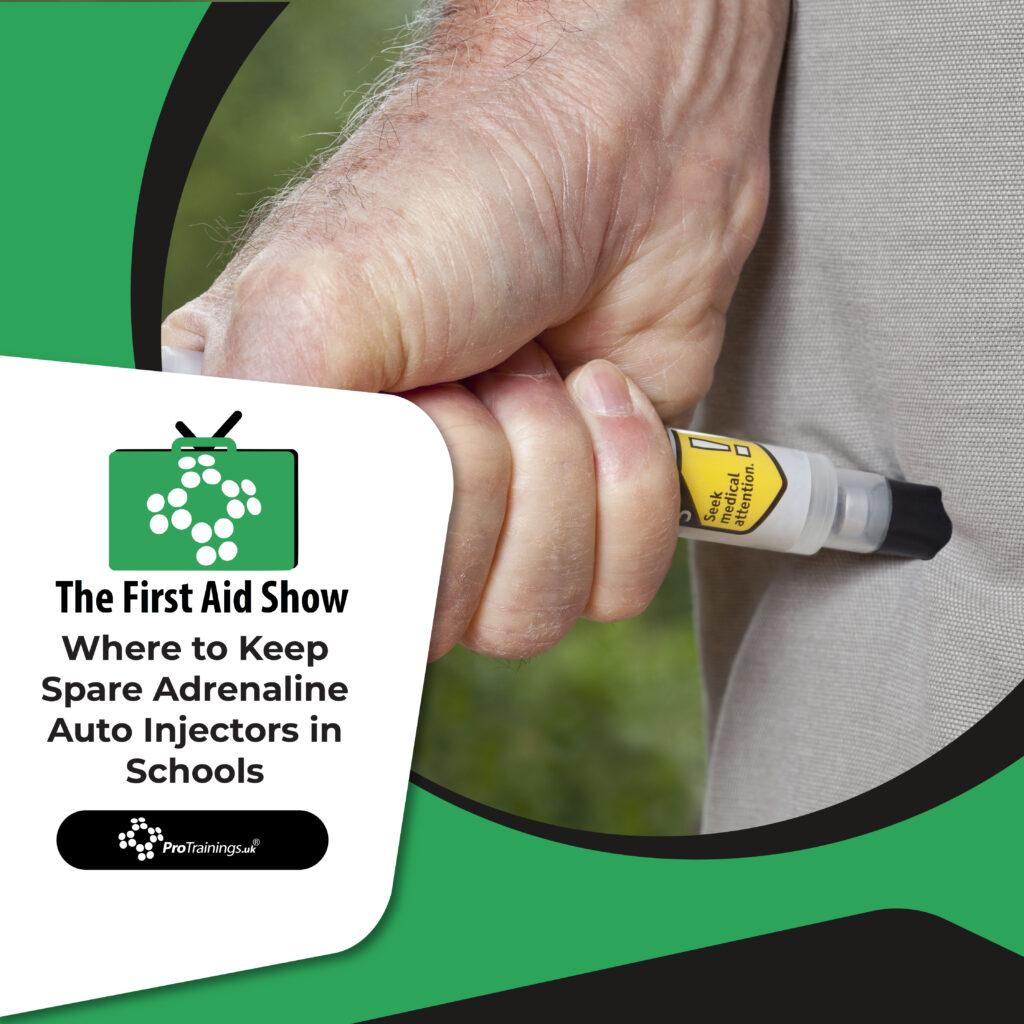

Understanding where to keep spare adrenaline Auto-Injectors in schools is an essential part of preparing for allergic emergencies. Every second counts during an episode of anaphylaxis, so staff must know exactly where emergency medication is stored and how to access it without delay. Furthermore, schools should have clear procedures that ensure both prescribed and spare adrenaline auto-injectors remain readily available throughout the school day. By planning ahead and following current guidance, schools can improve emergency response times and help protect pupils experiencing a life-threatening allergic reaction.
Anaphylaxis can develop rapidly and without warning. Consequently, every educational setting should have appropriate emergency medication available, alongside trained staff who understand their responsibilities. Although many children carry their own prescribed adrenaline auto-injectors, schools should never rely solely on pupils bringing their medication every day.
Why Quick Access Matters
During an anaphylactic emergency, delays in administering adrenaline can increase the risk of serious complications. Therefore, adrenaline auto-injectors should always be stored in locations that staff can reach quickly.
There are several situations where a child’s own prescribed device may not be available, including:
- The device has been forgotten at home.
- The medication has expired.
- The auto-injector has already been used.
- A second dose is required before the ambulance arrives.
For these reasons, current statutory guidance recommends that schools keep spare adrenaline auto-injectors for emergency use.
Recommended Numbers of Spare Auto-Injectors
The number of spare devices a school should keep depends on the age of the pupils and the type of educational setting. Consequently, schools should review their emergency medication regularly to ensure appropriate supplies remain available.
- State-funded nursery schools: Two spare 150-microgram auto-injectors.
- Primary schools: Two 150-microgram and two 300-microgram auto-injectors.
- Secondary schools: Between two and four 300-microgram auto-injectors.
- Special schools: Appropriate quantities of both 150-microgram and 300-microgram devices.
Additionally, larger schools should consider keeping spare devices in multiple locations so that an adrenaline auto-injector can be accessed within five minutes of an emergency occurring.
Where to Store Spare Adrenaline Auto-Injectors
Knowing where to keep spare adrenaline Auto-Injectors in schools involves more than simply placing them in a medical cupboard. Instead, schools should select locations that balance security with rapid accessibility.
Storage locations should be:
- Clearly labelled.
- Secure but easy for authorised staff to access.
- Protected from excessive heat, moisture and direct sunlight.
- Located close to areas where pupils spend most of their time.
- Available during lessons, break times, educational visits and extracurricular activities.
Furthermore, if a school operates across several buildings or campuses, suitable spare auto-injectors should be available at each site.
Staff Responsibilities
Every member of staff with responsibility for pupil welfare should know where emergency medication is stored. Moreover, they should understand how to access it quickly and who is responsible for routine checks.
Schools should ensure staff know:
- Where prescribed auto-injectors are stored.
- Where spare devices are located.
- How to recognise anaphylaxis.
- How to administer an adrenaline auto-injector.
- Who checks expiry dates.
- Who replaces expired or used devices.
Regular training sessions and emergency drills can help reinforce these procedures and improve staff confidence.
Include Storage Locations in School Policies
Every school should document the location of both prescribed and spare adrenaline auto-injectors within its allergy policy and emergency procedures.
This documentation should include:
- The location of each emergency medication point.
- Named members of staff responsible for checks.
- Inspection schedules.
- Procedures for replacing expired medication.
- Guidance for educational visits and off-site activities.
Additionally, keeping these records up to date helps ensure everyone follows the same emergency procedures.
Preparing for Unexpected Allergic Reactions
Importantly, around 20% of anaphylactic reactions in schools occur in children who have not previously been diagnosed with a food allergy. Consequently, a severe allergic reaction may happen without any prior warning.
Because of this, schools should always prepare for unexpected emergencies by maintaining appropriate stocks of spare adrenaline auto-injectors and ensuring staff know how to respond quickly.
Final Thoughts
Understanding Where to Keep Spare Adrenaline Auto-Injectors in Schools plays a vital role in effective allergy management and emergency preparedness. By storing devices in clearly identified, easily accessible locations, maintaining appropriate stock levels and providing regular staff training, schools can significantly improve their response to anaphylaxis.
Ultimately, rapid access to adrenaline can save valuable time during a medical emergency and may save a child’s life. Therefore, every school should regularly review its storage arrangements, emergency procedures and staff training to ensure it remains fully prepared for an anaphylactic emergency.