


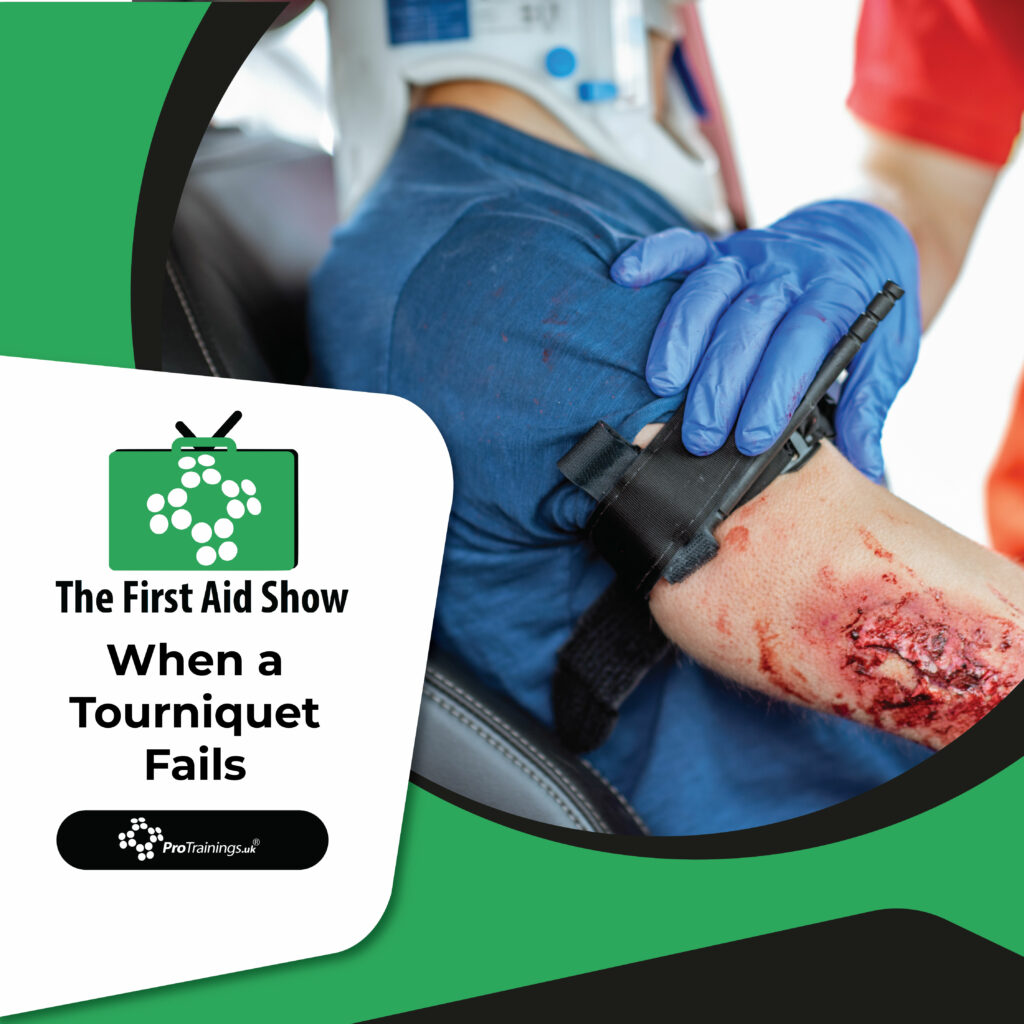

When a Tourniquet Fails, it can be a stressful and high-pressure moment. However, staying calm and following a structured approach can still control catastrophic bleeding. Although tourniquets are highly effective, they are not infallible. Therefore, understanding what to do next is absolutely critical in a life-threatening emergency.
Step One: Reassess and Tighten
Firstly, if bleeding continues after you apply a tourniquet, reassess immediately. In many cases, the device may have loosened slightly. When you first apply a tourniquet, the compression forces blood out of the limb, and as the tissues compress, the strap can lose tension.
Therefore, your first action should be simple but decisive:
- Tighten the tourniquet further
- Ensure it feels very firm
- Check whether the bleeding stops completely
Remember, a correctly applied tourniquet must stop arterial flow. If bleeding continues, it is not tight enough.
Step Two: Add Direct Pressure
If tightening does not fully resolve the bleeding, move to the next option. Even if direct pressure failed initially, the situation has now changed. Because the tourniquet has reduced blood flow, applying firm direct pressure over the wound may now prove effective.
Press directly onto the wound using:
- A trauma dressing
- A clean cloth
- Gloved hands if nothing else is available
Often, combining methods can make the difference.
Step Three: Use a Haemostatic Dressing
If bleeding still persists, consider adding a haemostatic agent. In situations where when a tourniquet fails becomes a concern, haemostatic dressings can provide the additional clotting support needed.
Pack the haemostatic dressing firmly into the wound and then secure it with a trauma dressing. Apply strong, sustained pressure. Because blood flow is already partially restricted, the haemostatic agent can now work more effectively than it might have earlier.
Step Four: Apply a Second Tourniquet
If bleeding continues despite these measures, apply a second tourniquet. However, placement is critical. The second device must go above the first one, closer to the body. Never place it below the original tourniquet, and never position it over a joint.
- Place the second tourniquet higher up the limb
- Avoid elbows and knees
- Tighten it fully until bleeding stops
In many cases, a second properly tightened tourniquet resolves the issue.
Improvised Options If Needed
If your bleed kit contains only one commercial tourniquet, you can improvise a second. Use strong material such as a fabric triangular bandage combined with a rigid object (for example, a solid stick or piece of wood) as a windlass. Twist firmly until bleeding stops.
Although rare, extreme situations may require a third device. However, this scenario is uncommon when earlier steps are performed correctly.
Stay Calm and Monitor
Ultimately, when managing when a tourniquet fails, decisive action, correct placement, and continuous monitoring are essential. Always reassess the wound, communicate clearly with emergency services, and prepare for rapid transfer to advanced medical care.
Catastrophic bleeding can become fatal within minutes. Therefore, knowing these escalation steps can genuinely save a life.