
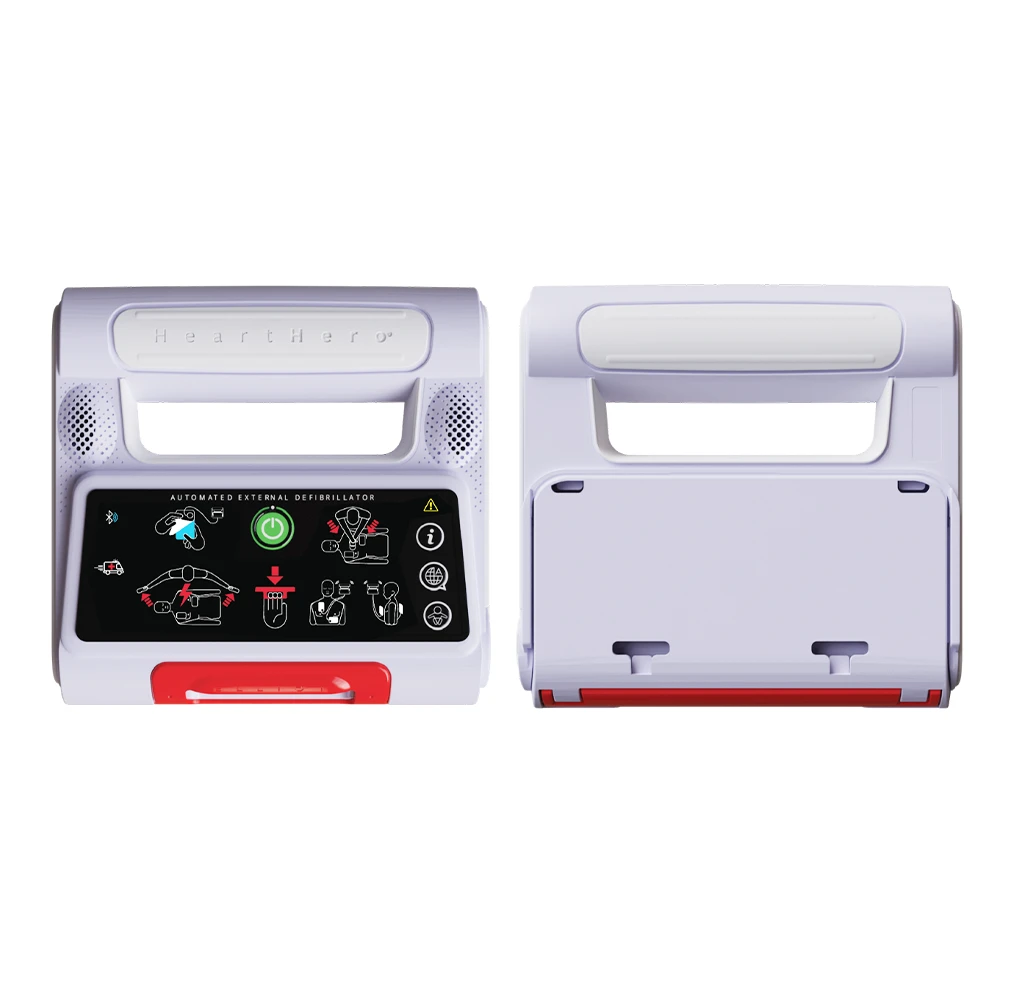
Understanding the indicator lights on the HeartHero AED is one of the simplest and most effective ways to confirm your device is ready for an emergency. These lights give users an immediate, at-a-glance overview of the AED’s status — covering everything from operational readiness to Bluetooth connectivity and maintenance alerts. Consequently, knowing what each light means is an essential part of responsible AED ownership.
What the Indicator Lights Tell You
The indicator lights on the HeartHero AED communicate three core pieces of information. At any given moment, they tell the user whether the device is ready for use, whether it is connected to the HeartHero app, and whether it requires attention. Together, these signals give a clear and immediate picture of the device’s condition — without the need to power it on or open the app.
Furthermore, because the lights update automatically as the device performs its routine self-checks, users always have access to current status information. A quick glance is all it takes.
The Bluetooth Indicator Light
One of the key indicator lights on the HeartHero AED relates to Bluetooth connectivity. This light communicates two distinct states:
- Blinking light — the AED is ready to pair with the HeartHero app but has not yet connected
- Solid light — the AED is successfully connected to the app and actively communicating
Once connected, the device exchanges data with the HeartHero app for remote monitoring and device management. This allows responsible individuals and organisations to track the AED’s status from a smartphone — without needing to be physically present at the device’s location. Moreover, the LTE connection means these updates transmit automatically to the web and appear in the app in real time.
The Readiness and Fault Indicator Lights
AEDs carry out regular automated self-checks to verify that their internal systems, batteries, and electrode pads are all functioning correctly. The indicator lights on the HeartHero AED reflect the outcome of these checks directly.
If the device passes its self-check and is fully operational, the status indicator confirms it is prepared and ready for an emergency. However, if a fault or maintenance issue arises, the indicator immediately alerts the user that attention is needed.
Common reasons a fault indicator may activate include:
- Low battery — the batteries require replacement before the device can be relied upon
- Pad replacement needed — the electrode pads have expired or have been used and must be changed
- General maintenance alert — another internal issue requires checking before the device is deployed in an emergency
Therefore, when a fault indicator activates, it is important to act promptly. A device showing a fault alert should not be considered ready for emergency use until the issue has been resolved.
Why Regular Visual Checks Still Matter
The indicator lights on the HeartHero AED provide a valuable and convenient monitoring tool. Nevertheless, they do not replace the need for routine equipment checks. Organisations and individuals responsible for an AED should include it in their regular inspection schedule — regardless of what the indicator lights show.
A routine check should confirm that the device is:
- Physically accessible — not obstructed, locked away, or stored incorrectly
- In good physical condition — free from visible damage, moisture ingress, or tampering
- Showing a ready status — indicator lights confirm operational readiness
- Stocked with in-date consumables — pads and batteries are within their expiry dates
Additionally, these checks support compliance in workplace settings and public access defibrillator programmes across the UK. Keeping a written log of inspections is good practice and demonstrates due diligence to any relevant authorities.
Confidence When It Matters Most
In a cardiac arrest situation, every second counts. A rescuer approaching an AED needs to act quickly and without hesitation. Because of this, understanding the indicator lights on the HeartHero AED in advance removes uncertainty at the critical moment. A green ready light means the device is operational. A fault alert means the device needs attention before use.
Ultimately, the indicator light system exists to make AED management simpler, faster, and more reliable — both for everyday monitoring and for emergency response. Combined with the HeartHero app and LTE connectivity, it gives users one of the most transparent and accessible device management systems available on any AED today.
Final Thoughts
Taking the time to understand the indicator lights on the HeartHero AED is a small step that carries significant value. These lights provide immediate, reliable information about device status — helping users, fleet managers, and organisations confirm their AED is ready to save a life at any moment.
If you have any questions about your HeartHero AED or would like guidance on routine maintenance and checks, get in touch with our team. We are here to help you keep your device ready when it matters most.
Learn Life-Saving CPR and AED Skills with HeartHero
When a sudden cardiac arrest occurs, knowing how to respond quickly can make a significant difference. The HeartHero AED Training Courses have been designed to help learners develop the knowledge and confidence needed to act in an emergency.
The Using the HeartHero AED Training Course focuses on the safe and effective use of an automated external defibrillator (AED), guiding learners through the steps involved in recognising a cardiac emergency and delivering potentially life-saving treatment. For those looking to develop a broader understanding of emergency response, the CPR and HeartHero AED Training Course combines AED training with essential CPR skills.
To support practical learning, a range of HeartHero AEDs and accessories are available, including training equipment, replacement pads, batteries and carry cases. These products can help organisations, training providers and first aiders maintain their equipment and gain valuable hands-on experience.
By combining quality training with practical equipment, you can build the confidence and skills needed to respond effectively when every second counts.
Leave a Reply