
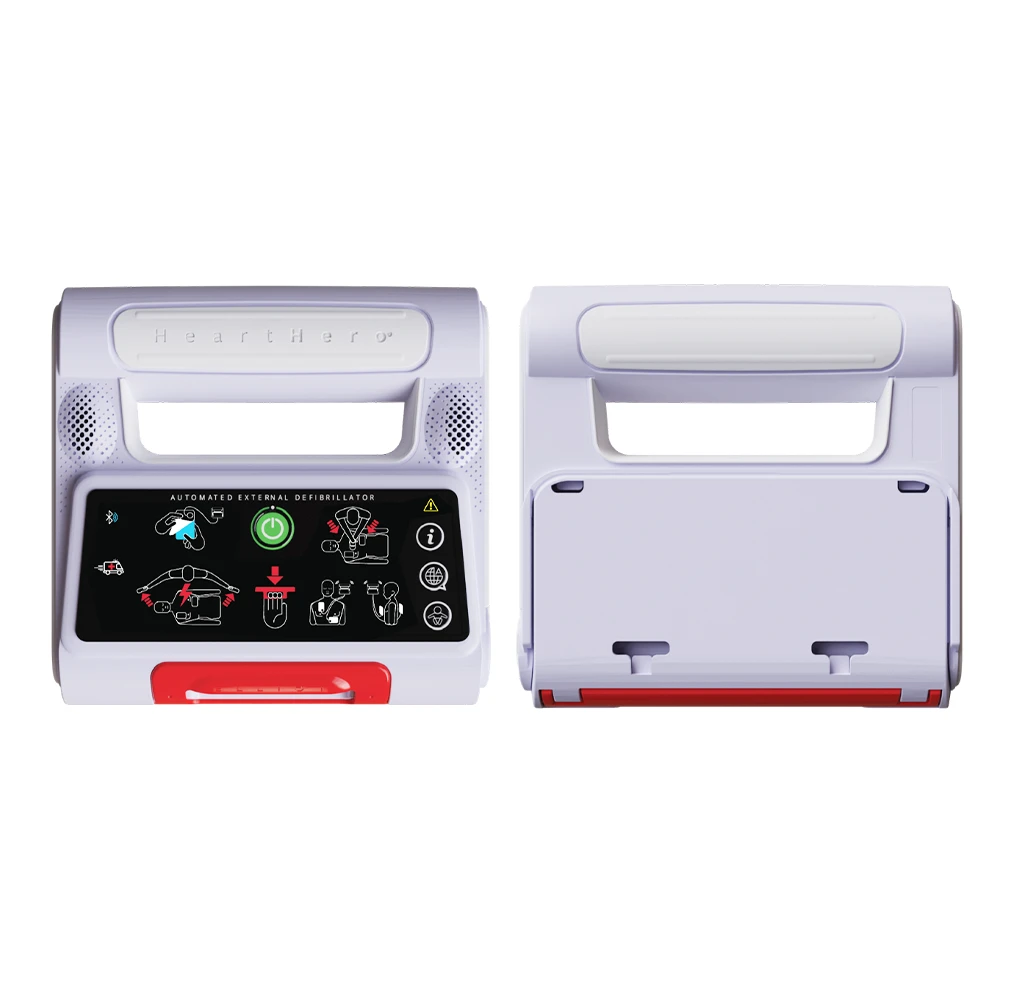
Using the HeartHero AED on a child or infant is something every rescuer should feel prepared to do. Paediatric cardiac arrest is a frightening situation, but acting quickly and correctly saves lives. The HeartHero Elliott AED includes a dedicated child mode that automatically adjusts shock energy and device guidance for smaller patients. Consequently, one device covers both adults and children without the need for separate equipment.
Who Does Child Mode Apply To?
Child mode applies to any casualty weighing approximately 25kg or less. This typically covers young children and infants. When activated, the device reduces the shock energy it delivers to a level that is safe and appropriate for a smaller patient’s heart.
Additionally, the voice prompts and guidance adapt to reflect the paediatric rescue — giving the rescuer clear, relevant instructions throughout the entire process.
How to Activate Child Mode
Activating child mode takes just one step — but timing matters. Follow this sequence:
- Turn the device on by pressing the green power button or pulling the red handle
- Press the child button on the device before applying the pads
- The HeartHero Elliott AED will adjust its treatment automatically from this point forward
It is important to press the child button before the pads go on. Once activated, the device handles the rest. There are no further settings to configure.
Pad Placement When Using the HeartHero AED on a Child or Infant
Correct pad placement is essential for effective defibrillation. The approach differs depending on the size of the child:
- Larger children — place one pad on the upper right side of the chest and the other on the lower left side underneath the armpit, using the same positions as an adult
- Smaller children and infants under 25kg — place one pad on the centre of the chest, slightly offset to the casualty’s left, and the other pad on the centre of the back between the shoulder blades
The front-and-back positioning for smaller patients ensures the pads do not overlap. Overlapping pads prevent the shock from delivering correctly. Therefore, taking a moment to position them accurately before analysis begins is critical.
Before placing the pads, ensure the child’s chest is bare and dry. Remove any clothing that may interfere and press each pad firmly against the skin to ensure full contact.
Following the Voice Prompts
Once the pads are in place and child mode is active, follow the HeartHero Elliott AED’s voice prompts exactly as you would during an adult rescue. The device guides every stage of the process from this point forward.
When the AED begins analysing the heart rhythm, stop CPR and ensure nobody touches the casualty. Movement during analysis interferes with the device’s ability to read the rhythm accurately. Make sure all bystanders stand clear until analysis is complete.
If the device advises a shock, ensure everyone stands clear and follow the prompt to deliver it. Afterwards, resume CPR immediately as instructed. Furthermore, the AED will continue to monitor the child’s rhythm, advising when to pause for re-analysis and when to continue compressions throughout the rescue cycle.
Always Use the AED — Even on a Child
Many rescuers hesitate when facing a paediatric cardiac arrest, unsure whether it is safe to use a defibrillator on a child. The answer is clear — using an AED on a child is always better than not using one. A shockable cardiac arrest rhythm cannot correct itself. Without defibrillation, survival is unlikely.
Moreover, using the HeartHero AED on a child or infant removes the need for the rescuer to make any clinical decisions. Child mode sets the correct energy level. The voice prompts direct pad placement and CPR. The device monitors and advises continuously. The rescuer simply needs to follow the prompts and keep going.
Servicing After Use
After every use — whether on an adult or a child — the HeartHero Elliott AED must be serviced before returning to active deployment. Replace the electrode pads and battery immediately. Restart the device and complete the test sequence to confirm it has returned to a ready state.
A device that has not been serviced after use must never be assumed ready for the next emergency. Keeping a written log of servicing steps supports compliance and demonstrates responsible AED management across any organisation or vehicle fleet.
Final Thoughts
Using the HeartHero AED on a child or infant is straightforward when the steps are clear. Activate child mode before the pads go on, position the pads correctly for the child’s size, and follow the device’s voice prompts at every stage. The HeartHero Elliott AED does the rest — guiding the rescuer confidently through one of the most difficult emergencies anyone can face.
Get in touch with our team today if you would like further guidance on paediatric AED use or to discuss first aid training for your organisation.
Learn Life-Saving CPR and AED Skills with HeartHero
When a sudden cardiac arrest occurs, knowing how to respond quickly can make a significant difference. The HeartHero AED Training Courses have been designed to help learners develop the knowledge and confidence needed to act in an emergency.
The Using the HeartHero AED Training Course focuses on the safe and effective use of an automated external defibrillator (AED), guiding learners through the steps involved in recognising a cardiac emergency and delivering potentially life-saving treatment. For those looking to develop a broader understanding of emergency response, the CPR and HeartHero AED Training Course combines AED training with essential CPR skills.
To support practical learning, a range of HeartHero AEDs and accessories are available, including training equipment, replacement pads, batteries and carry cases. These products can help organisations, training providers and first aiders maintain their equipment and gain valuable hands-on experience.
By combining quality training with practical equipment, you can build the confidence and skills needed to respond effectively when every second counts.
Leave a Reply